
Chemistry Education Resources

Use our chemistry education resources to find out where a chemistry education could take you

GCSE

Read our chemistry GCSE resources to help you revise, and for more information about taking GCSE chemistry.

A Level

These A level chemistry resources will guide you as you study, and provide more information about chemistry A level.

Degree

Find out more about doing a chemistry degree, the different types of degrees, and where to study.

Apprenticeships

Discover apprenticeships in chemistry, the different types of apprenticeships, and what an apprentice should expect to do and learn.

Fields of Chemistry

Take a look through the different fields of chemistry and what types of chemistry to study for each different field.

View All

Browse our complete collection of chemistry education resources.

More Information About Our Chemistry Education Resources

A good chemistry education opens diverse opportunities to pursue a variety of career paths. On this page, you can sharpen your understanding of chemistry by accessing easy-to-read articles on key topics, from analytical chemistry and biochemistry to the difference between inorganic and organic chemistry.

Our chemistry education resources also include articles to help current and prospective GCSE students study chemistry subjects and choose the course that’s right for them. Whether you’re looking to revise for your chemistry GCSE exam or are trying to decide if you should take chemistry GCSE as a single or combined science, we’ve got all the information you need right here on this page.

If you want to study chemistry at a higher level, you can also use the chemistry education resources above to find the best places to study chemistry in the UK and what you can do with a chemistry degree. Alternatively, if you’ve already earned your chemistry degree but are unsure how to use it, this page will help you to find the best chemistry graduate schemes and apprenticeships, as well as how you can put your degree to good use.

Latest Resources

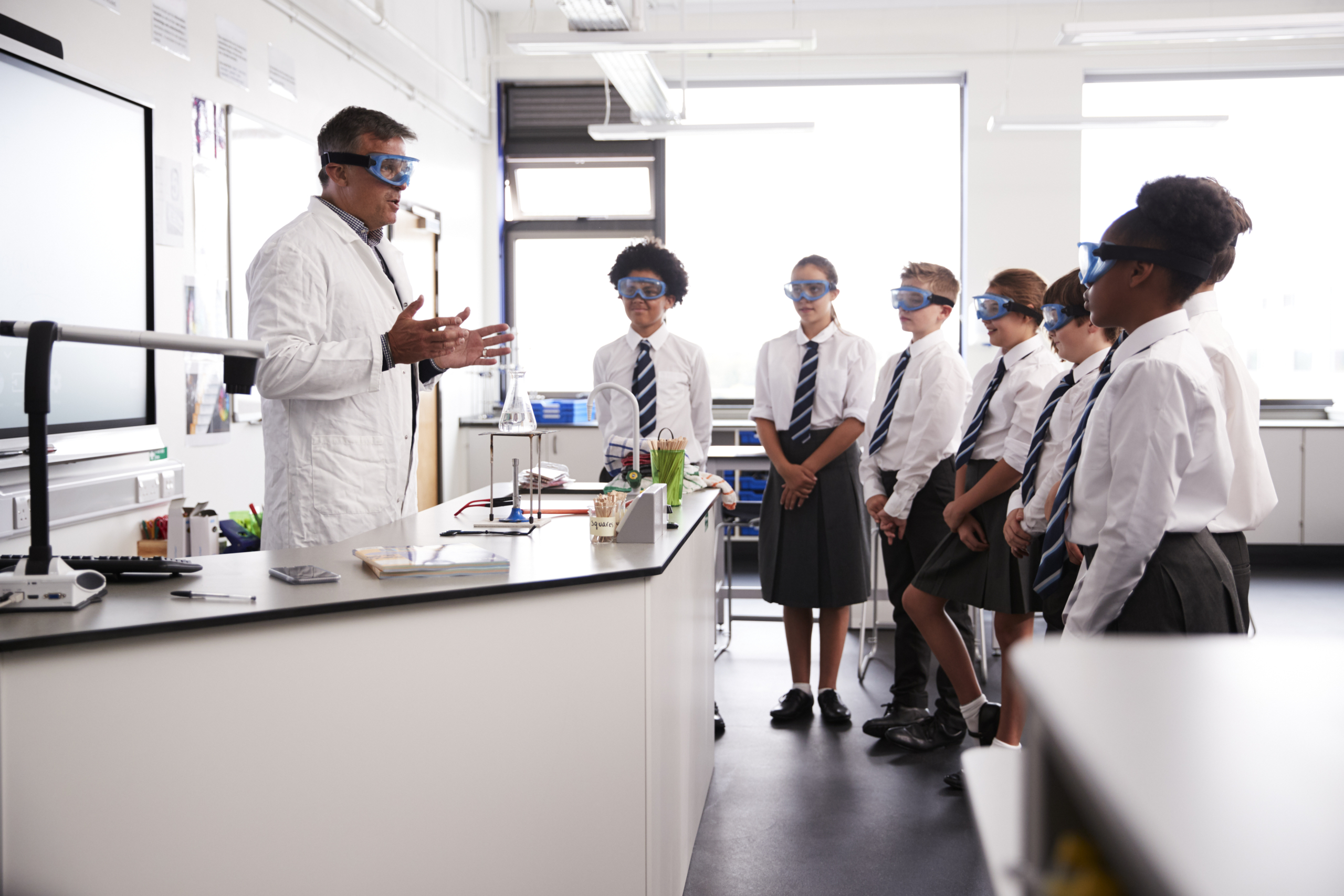
Teacher explaining science lab safety rules to the class

Science Lab Safety Rules: Building Confidence in Students

Organised school science labs typically have one thing in common – the students are comfortable and confident. Whether handling common chemicals, solvents, or lab equipment, they know exactly what they’re doing. In addition to working confidently, science students should know what to do when something goes wrong. This requires a

Young girl using a microscope in science class

Making Chemistry Fun: KS2 & KS3 Science Experiments for Schools

Young students often perceive chemistry as complex, highly mathematical, and data-driven. And while maths and analytics play an important role in chemical reactions, acids, and molecular processes, there’s another side to the subject – and it’s lots of fun. Conducting hands-on science experiments at Key Stage 2 (KS2) and Key

Two children at table doing STEM activities

A Guide to Developing STEM Skills at Home

Science, technology, engineering, and mathematics (STEM) skills are invaluable in our ever-advancing technological world. Whether your child wants to learn about chemicals and chemical reactions or expresses an interest in aerospace, STEM education will turn their interests into passions. Promoting STEM education at home supports organic learning beyond the classroom.

Science student working in a lab

The Best Chemistry Graduate Schemes in the UK

If you’ve earned a chemistry degree, graduate schemes are an excellent way to learn on the job. They allow you to expand your knowledge of chemicals and their real-world applications. The best chemistry graduate schemes are generally entry-level jobs that include training on different aspects of company operations. This provides

Chemistry classroom, where common chemistry misconceptions may start

Clearing Up 5 Common Chemistry Misconceptions

Chemistry is everywhere. It’s active in the air in our lungs, the products on our bathroom shelf, and the food on our plate. Even deionised water is considered a chemical. Still, chemistry remains one of the most misunderstood subjects in the natural and man-made world. Misconceptions about chemicals and basic

Girl using microscope during primary school science class

Primary Science Curriculum: A Guide for Teachers

Our world needs more scientists. They work to solve major challenges like climate change, unlock mysteries of the natural world, and explore safer ways to use essential chemicals in everyday products. This is why teaching scientific literacy at an early age is so important. It instils children with an intimate
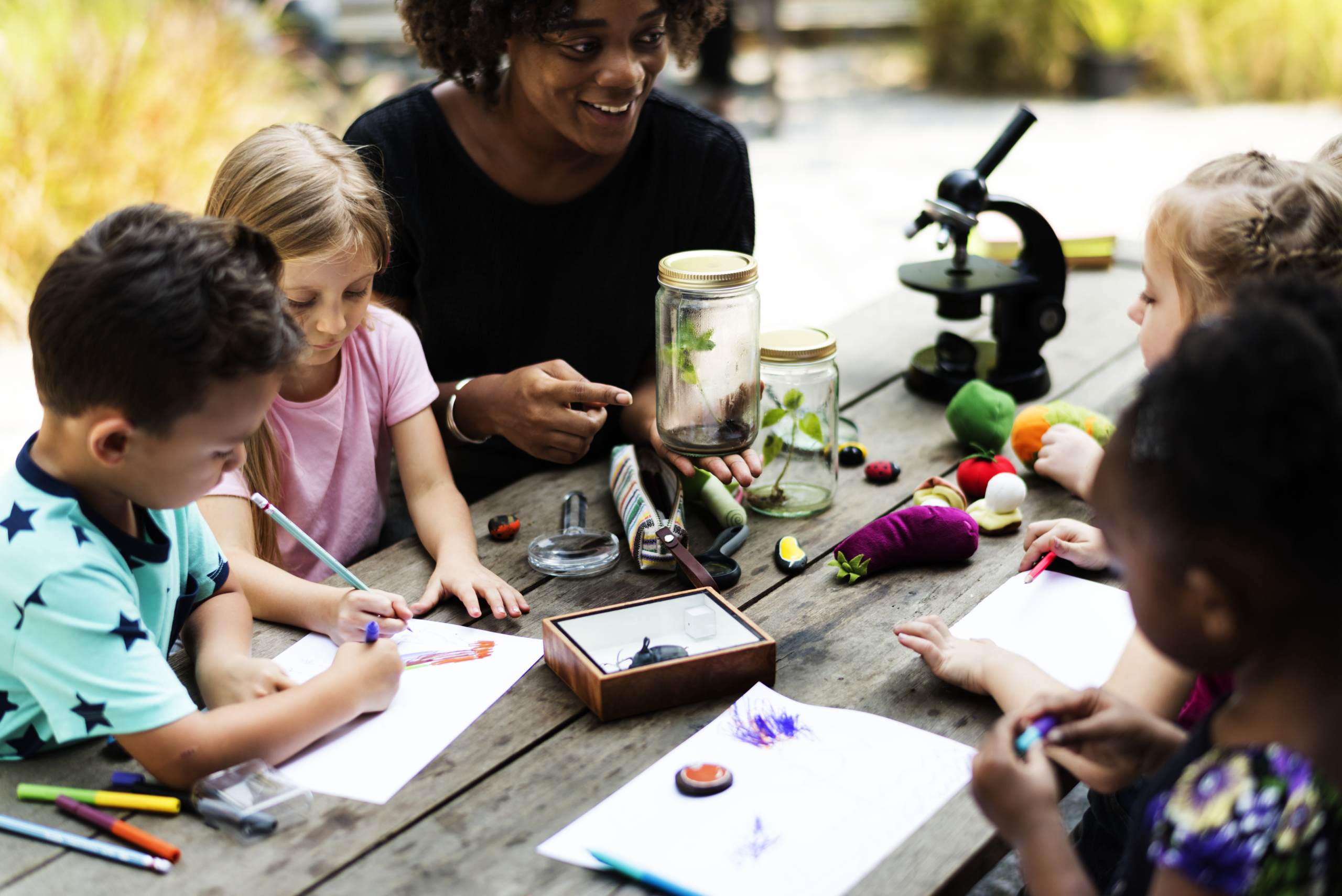
Teacher perform easy science experiments outdoors

Outdoor Learning: Easy Science Experiments for Primary School Teachers

There’s a wealth of scientific knowledge just outside the classroom doors. Primary school teachers can tap into it with easy science experiments that investigate organic chemical reactions and the natural world. Outdoor learning offers many benefits to young students. It reduces stress, improves their relationship with nature, and supports independent
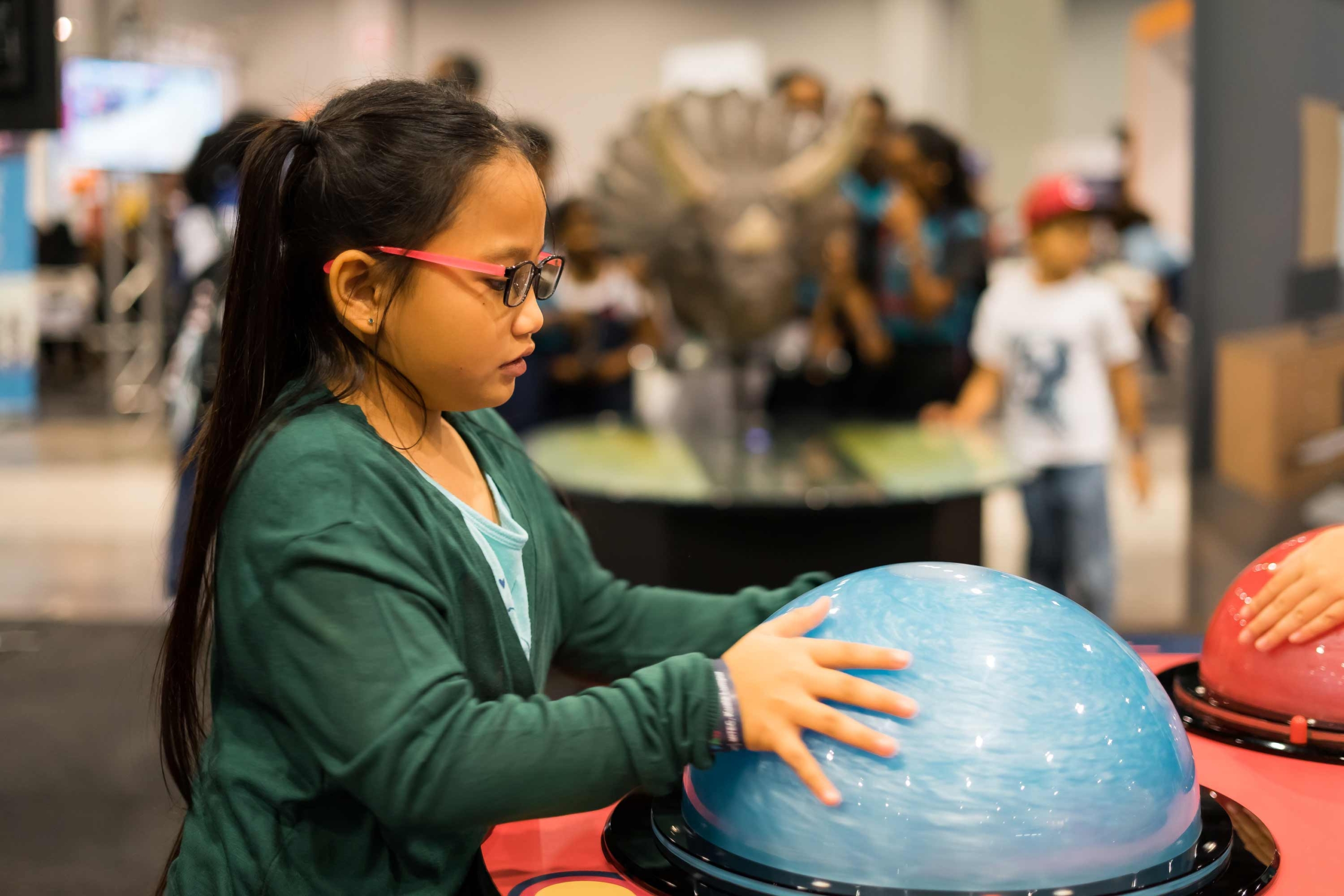
A young girl interacting with a semi sphere at a science museum

The Best UK Science Museums and Resources for Kids

If you want a fun, interactive way to teach your children about science, a trip to a museum is a fantastic idea. The UK is bursting with world-class museums ideal for families, with exciting features ranging from interactive exhibits and immersive experiences to planetariums and experiment labs. Here, we’ll run

Primary school children in a science class

10 Science Apps and Websites For Kids

10 Science Apps and Websites For Kids Compared to even ten years ago, the amount of technology children have access to is incredible. Long gone are the days where scientific learning was heavily learned through hefty textbooks. Nowadays, there are near countless resources, websites and apps that help support scientific

How can ReAgent help you?

Send us a message and our friendly team will get back to you within one business day.

What happens to my enquiry?

Your message is sent directly to our dedicated customer service support team where it is distributed to the department best suited to help you. During office hours one of our staff members will promptly email you back or give you a quick call to discuss your requirements or respond to your question. All without obligation or sales pressure. We are here to help you, and are dedicated to “above and beyond” levels of customer service.

Prefer to call?

Call us FREE on 0800 9555 798. Overseas? Call +44 1928 716903. Available 8:30am – 5pm, Monday to Friday.

Customer Service
“All enquiries are treated as confidential – we never share your details”
Kerry
Customer Service
Sales Director
“Our manufacturing facility is accredited to ISO 9001, ISO 13485, ISO 14001 and ISO 45001”
Darren
Technical Director
Account Director

“We provide comprehensive technical support with every enquiry”
Jo
Account Director

Jane Fletcher
Google
5/5
Always have excellent service from yourselves from ordering product to delivery.
Kevin Wallcroft
Google
5/5
A particularly easy to deal with chemical company. I telephoned, got all the advice needed with excellent friendly service. My chemicals arrived the very next day. Very happy!
Joanne King
Google
5/5
Fast efficient service, was kept updated on order throughout. Can not fault ReAgent sales and delivery processes.
Hebe Arat
Google
5/5
Their customer services were very helpful, sending us all the lab reports we needed, before we even bought from them. Then, once we ordered the product came very quickly.

Search the chemicals you need by product name, product number, or CAS number:

Chemistry Education Resources