
Science, technology, engineering, and mathematics (STEM) skills are invaluable in our ever-advancing technological world. Whether your child wants to learn about chemicals and chemical reactions or expresses an interest in aerospace, STEM education will turn their interests into passions.
Promoting STEM education at home supports organic learning beyond the classroom. It can also pave the way to an exciting career in science.
The good news is that you don’t need a lab or a teaching degree.
Whether your child is six or sixteen, this guide to developing STEM skills at home gives you practical ways to support active learning.
In this post:
Key Takeaways
At-home STEM learning expands on the foundational knowledge children learn in school
Online resources offer interactive programmes, videos, worksheets, and quizzes to get children started on at-home STEM education
Parents can work alongside their children by conducting age-appropriate experiments that explore chemistry, physics, and other science topics
Setting up a STEM workspace at home gives children the space they need to work, explore, and discover which subjects they’re passionate about
The Importance of STEM Learning at Home
The primary school science curriculum provides a solid foundation for STEM knowledge. But it doesn’t always offer the depth or hands-on experience every child needs. Home learning fills this gap.
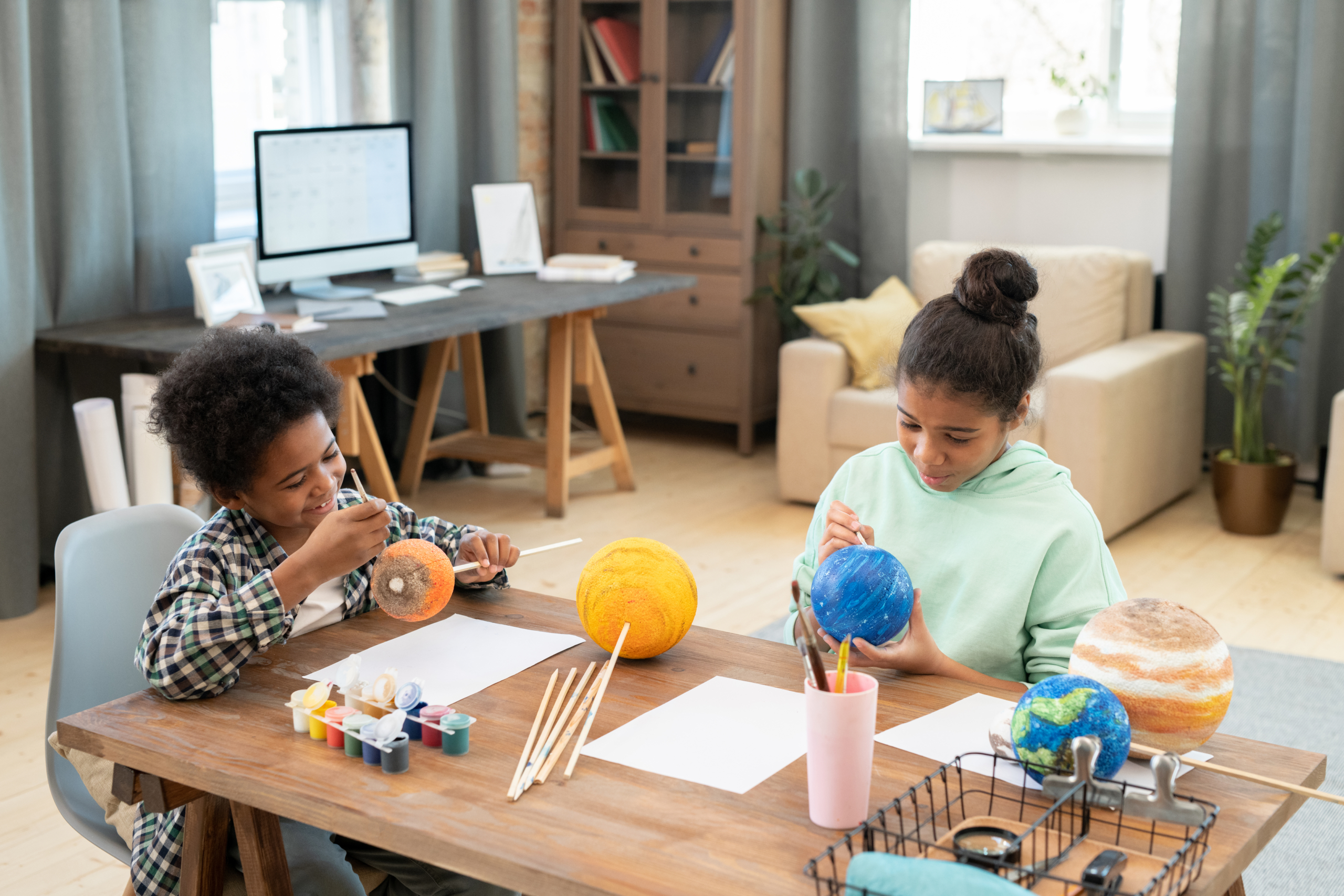
At-home experiments and activities give children the freedom to explore topics at their own pace. They can revisit challenging concepts and dive deeper into subjects they love.
Learning in a low-pressure home environment sparks curiosity in children who lack confidence at school. They may feel more comfortable asking questions and stepping outside their comfort zone.
STEM skills aren’t just for future scientists or engineers. Problem-solving, logical reasoning, and tech literacy are valuable in almost every field. Starting your children early (and making it fun) creates a way of thinking that lasts a lifetime.
Essential STEM Resources for Parents
Discovering what’s available and determining the right materials is your first step. The STEM resources you use should align with your child’s age, interests, and learning style.
You don’t need to spend a fortune to get started. There are plenty of affordable and free resources that make it easy to set up a positive learning environment.
Age-Appropriate Kits
STEM learning kits have come a long way. Today’s options include everything from basic chemistry sets for primary school children to advanced electronics kits for teenagers.
Look for kits that offer the following:
- Step-by-step instructions that children can follow independently
- Multiple experiments or activities within a single kit
- Safety-tested components
- Real-world concepts, such as circuits, ecosystems, or chemical reactions
Buying age-appropriate kits ensures that you’re challenging your child without overwhelming them.
If you have a younger child, look for kits that focus on sensory play and basic construction. Blocks, magnets, and simple pulleys introduce physical concepts in a fun, interactive way.
Teenagers require more complex challenges to stay engaged. Robotics kits that involve simple soldering or programming microcontrollers provide a deeper level of technical involvement.
Online Resources and Platforms
You can find a wealth of high-quality educational STEM content online. The following list includes learning resources by topic:
Space and technology:
- NASA Kids Club – Interactive games and activities that let primary-school-aged children explore space
- Science Museum Group – Educational videos, quizzes, and hands-on activities
- Khan Academy – Structured courses in physics, logic, and computer science
Engineering:
- The Institute of Engineering and Technology – STEM teaching resources and activities for children aged 4 to 11
- Twinkl – Projects and worksheets focused on engineering
- STEM Learning – Offers a wide range of learning resources for engineering and other STEM topics
Mathematics:
- NRICH – Engaging math resources for children aged 3 to 18
- BBC Bitesize – Math videos, guides, activities, and quizzes
- Topmarks – Interactive maths games, worksheets, and teaching resources for all ages
Sometimes, visual storytelling helps children retain information more effectively than textbooks. YouTube channels like Veritasium or Mark Rober make complex physics and science concepts entertaining and easy to understand.
There are also plenty of science apps for kids that support interactive learning.
At-Home Science Projects
Practical application is central to STEM education. At-home experiments help your child understand the crucial role science plays in the natural and man-made world.
Fun Experiments for Young Learners
Simple experiments promote observation, teamwork, and interactive learning. The following are easy to set up and execute.

Rain Cloud in a Jar
This experiment teaches your child about saturation and precipitation.
Fill a jar three-quarters full with warm water, then add a layer of shaving foam on top. Drop food colouring onto the foam and wait a few minutes.
As the colour gets heavy, it sinks through the foam and falls into the water below, mimicking how raindrops fall when a cloud becomes saturated.
Bubbling Volcano
The classic baking soda and vinegar volcano experiment demonstrates how an acid and a base react to create carbon dioxide.
Add a few tablespoons of baking soda to a plastic container and slowly pour in white vinegar. The fizzy eruption makes the lesson memorable and engaging for young minds.
Crystal Creation
Teach your child about saturated solutions with this captivating experiment.
Add approximately 400g of sugar to 250ml of hot water. Once dissolved, pour the solution into a glass jar and let it cool.
Dip a string into the solution, then hang it to dry. After a few days, your child can observe sugar crystals forming on the string.
Advanced Projects for Older Kids
More advanced experiments and activities challenge older children and teens, giving them an opportunity to engage with real-world scenarios. They also help them practice forming and testing hypotheses.
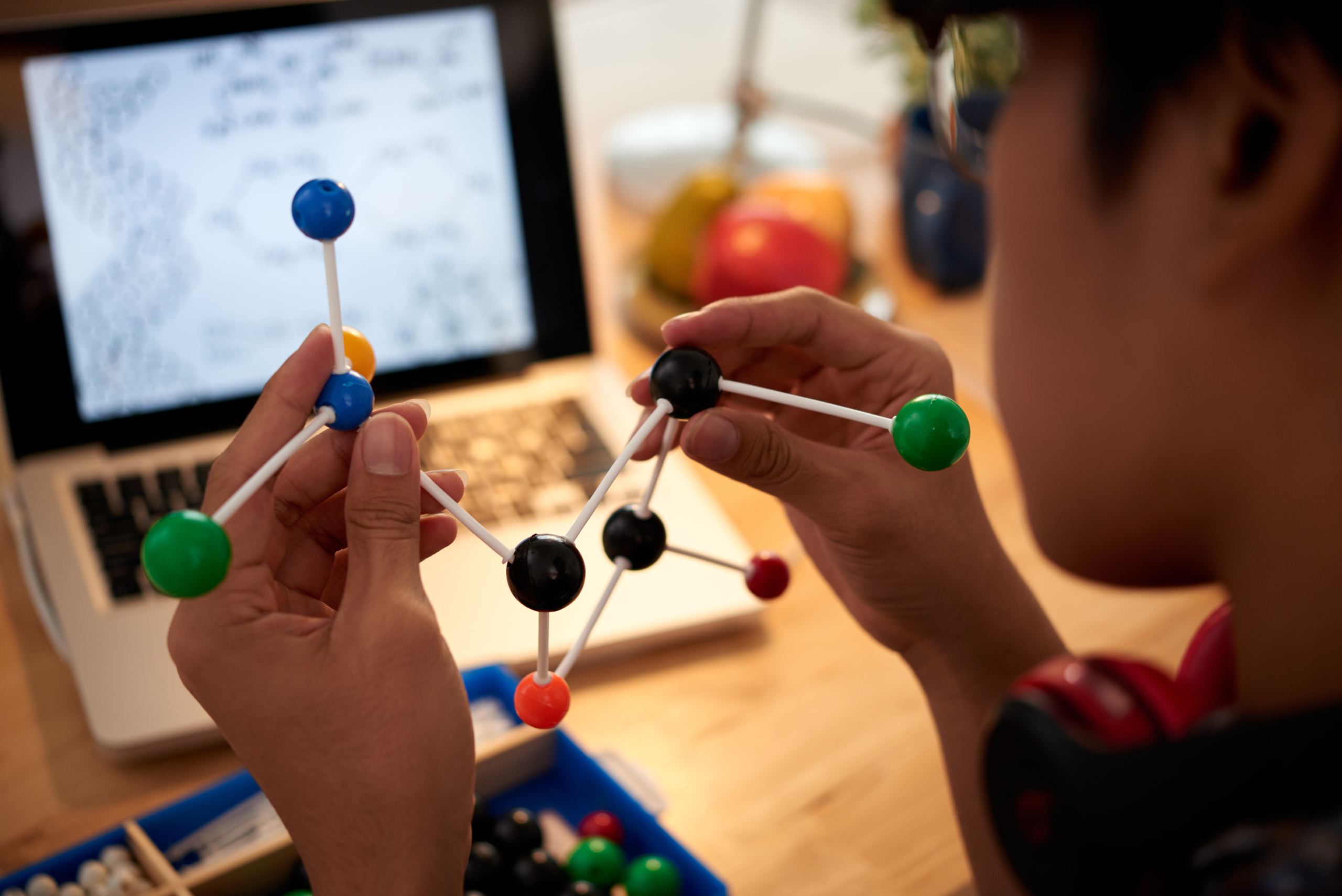
Simple Redox Reaction
This chemistry experiment shows how oxygen changes the molecular structure of a solution.
You’ll need warm water, honey, sodium hydroxide (commonly found in drain cleaners), and indigo carmine, which is a blue food colouring easily found online.
Start by adding 250ml of warm water to a glass jar. Dissolve 5g of honey and a small amount of sodium hydroxide in the jar. Add a tiny amount of indigo carmine.
Let the solution rest and watch as it turns from blue to red to yellow. Introduce oxygen to the solution by shaking the jar and observe the solution turning back to blue.
Strawberry DNA
Experiment with molecular biology and solubility with this fascinating experiment. You’ll need three strawberries, isopropyl alcohol, dish soap, salt, a coffee filter, and two glasses.
Start by cooling the isopropyl alcohol in the freezer for at least an hour. Create a solvent by mixing ½ cup of water, 1 tablespoon of dish soap, and a teaspoon of salt in a glass. Add the strawberries to a ziplock bag, smash them to a fine pulp, and add 2 tablespoons of the solvent.
Pour the strawberry mixture through the coffee filter into the other glass. Gently pour the cold isopropyl alcohol down the side of the glass to form a layer on top of the strawberry mash. Don’t mix the two.
Watch as strawberry DNA in the form of white fibres floats to the layer of alcohol.
Lemon Battery
This advanced experiment demonstrates how chemical energy turns into electrical energy.
Gather four lemons, galvanised/zinc-coated nails, copper pennies, alligator clip wires, and a low-voltage LED light bulb. Loosen the juice in each lemon by squeezing them. Insert a nail and copper wire into each lemon, ensuring they don’t touch.
Use the alligator clips to connect the copper penny of the first lemon to the zinc nail of the second lemon, and so on. Connect the final copper lead and the first zinc lead to the legs of the LED bulb and watch it turn on.
Setting Up a STEM Learning Space
You don’t need professional lab equipment to foster an analytical mindset. Creating a simple, functional workspace will help your child focus on their STEM learning.
Choose a well-lit area with a table that can handle spills or scratches. The more natural light, the better. It reduces eye strain during intricate tasks like circuit building or model making.
Storage is crucial for maintaining an orderly learning environment. Use transparent bins or jars to categorise components like batteries, wires, and other supplies.
Conduct outdoor experiments when the weather is good. This will give your child a chance to explore the relationship between science and nature.
STEM Tools and Equipment
You only need a few foundational tools to set up a STEM learning environment.
Whether you’re creating a basic workspace or a mini lab, these tools will help your child get started right away:
- Goggles, gloves, and an apron
- Rulers, kitchen scales, and measuring cylinders
- A notebook for recording hypotheses and results
- Glue guns, pliers, and adhesives
A basic microscope or a high-powered magnifying glass takes your child’s setup to the next level. You can also get more advanced with a digital multimeter for measuring voltage.
Conclusion
This guide to developing STEM skills at home has covered the core elements you need to get started. Whether your child is just beginning to explore science or is ready for more advanced projects, the right environment, tools, and a little creativity make all the difference. Start small, keep it fun, and let curiosity lead the way.