
If you want a fun, interactive way to teach your children about science, a trip to a museum is a fantastic idea.
The UK is bursting with world-class museums ideal for families, with exciting features ranging from interactive exhibits and immersive experiences to planetariums and experiment labs.
Here, we’ll run through some of the best UK science museums and resources for kids, so you can start planning your next educational family day out.
In this post:
Key Takeaways
The UK offers excellent science museums and resources that make STEM learning fun, hands-on, and accessible for children
Families can extend learning beyond museum visits through online activities, DIY experiments, virtual exhibits, and community STEM programmes
Interactive, play-based experiences help spark curiosity and build confidence in science from early years through to teens
Top Science Museums for Children in the UK
1. The Science Museum, London
The Science Museum in London’s South Kensington (not far from the Natural History Museum and the V&A) is perfect for science-curious children of all ages. It’s free entry, extremely interactive, and widely regarded as one of Europe’s best science museums.
It cleverly combines a mix of historic scientific artefacts – such as Stephenson’s Rocket locomotives and Alan Turing’s Pilot ACE computer – with cutting-edge interactive tech.
Standout features include:
- Wonderlab, including the Chemistry Bar
- The Equinor Gallery and water based chemical experiments.
- IMAX cinema
- Flight and Space galleries.
Visit Website: https://www.sciencemuseum.org.uk

2. Science and Industry Museum, Manchester
Manchester’s much-loved Science and Industry Museum blends history and technology with lots of fun interactive exhibits. It’s located on the site of the world’s oldest surviving passenger railway station, the Liverpool Road Station – making it a great choice for transport enthusiasts as well as science lovers.
It’s also currently undergoing a multi-million pound restoration programme, so is set to be even better in the future.
Standout features include:
- The Experiment gallery
- The Revolution Manchester gallery, featuring ideas that changed the world
- The Power Hall, featuring iconic engines which power industries, multi-sensory experiences, and inspiring engineering stories
- Power Up – the ultimate gaming experience, held on weekends and school holidays
- Early years activities
Visit Website: https://www.scienceandindustrymuseum.org.uk/
3. Winchester Science Centre and Planetarium
Winchester Science Centre and Planetarium is home to lots of hands-on exhibits focused on the senses, sound, and space – as well as the natural world. Where it shines is its emphasis on child-led exploration and play-based STEM learning, as well as its accessible design.
Standout features include:
- The largest standalone planetarium in the UK
- Immersive 360° shows
- Accessible exhibits designed for inclusivity
Visit Website: https://www.winchestersciencecentre.org/
4. Eureka! Science and Discovery, Merseyside
There are two sites for the fabulous Eureka! museum in the UK, one in Halifax and one in Wallasey, Merseyside. Both are excellent, but the Merseyside one is targeted towards older children and has a more STEM-led science focus.
The museum features exhibits designed around everyday science concepts such as health, the human body, and engineering.
Standout features include:
- The ‘Bodies’ zone
- Engineering challenges
- Early years discovery play
- Creative STEM labs
Visit Website: https://discover.eureka.org.uk/
5. We The Curious, Bristol
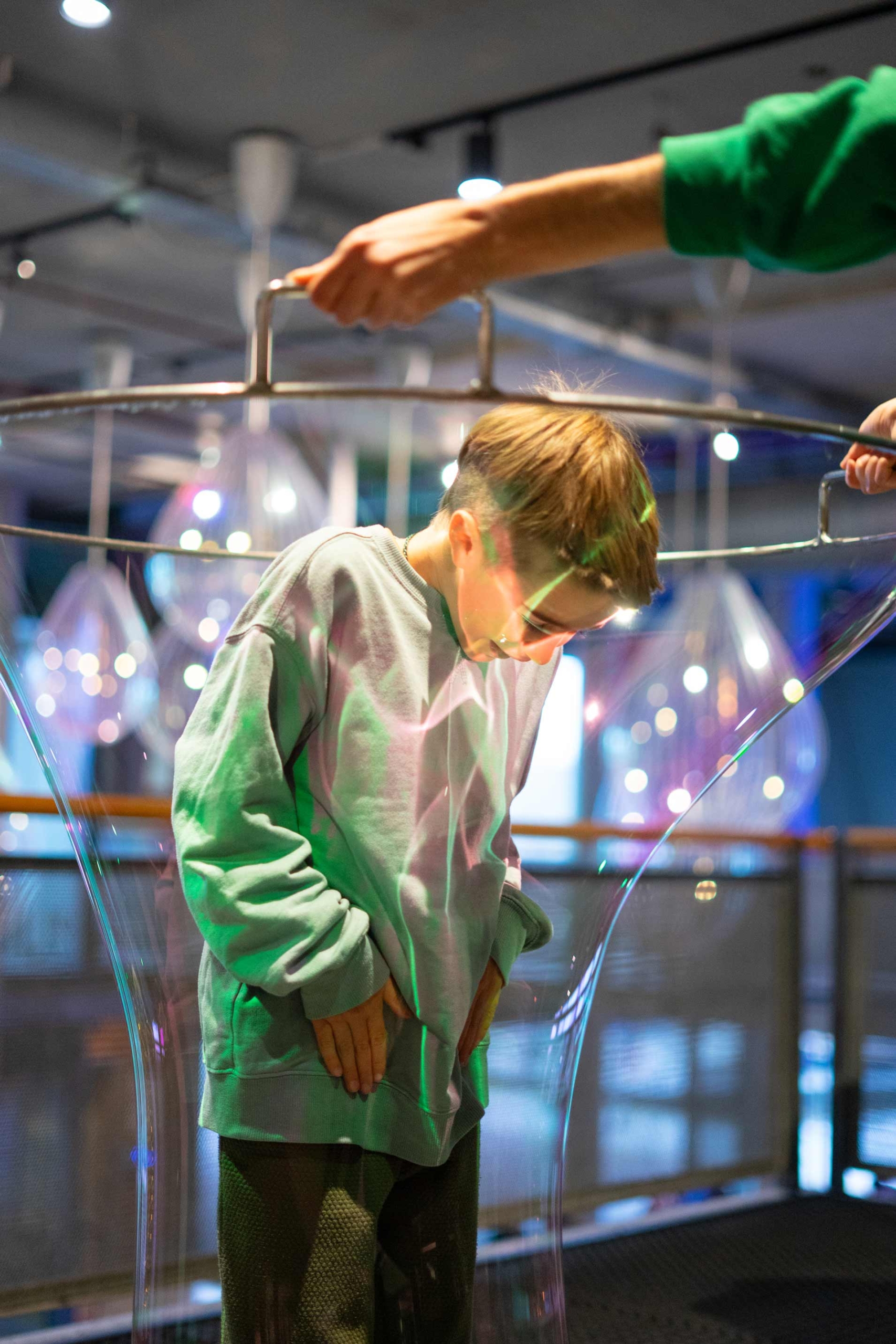
We The Curious in Bristol, which reopened after extensive refurbishment in 2024, features over 200 interactive, curiosity-driven exhibits over two floors. It’s a fantastic place to get kids experimenting, asking questions, and being curious about science.
Standout features include:
- 3D Planetarium
- Project What If
- Live science shows, workshops, and presenter-led experiences
- Animation studios, robotics and 3D printing zones, food science exhibits
Visit Website: https://www.wethecurious.org/
Learning Resources Beyond the Museum Visit
If you can’t make it to a museum or want to continue the learning after a recent visit, there are plenty of child-focused resources out there.
Interactive Exhibits and Hands-On Galleries
Many major UK science museums now offer digital interactive resources, virtual tours and online simulations. They may include mini-games and puzzles, 3D virtual galleries, and challenges that can be carried out at home. These allow children to explore their curiosity about science from home or school.
It’s also common to see partnerships between museums and schools, where interactive activities are aligned with school curriculum topics such as energy, space, forces, or materials.
Online Learning Materials and Activity Sheets
Before you leave the museum on your trip, it’s worth asking whether there are any activity packs or worksheets available to take home. It’s also common to find these on popular science apps and websites. They may include things like:
- Instructions for build-your-own experiments
- Print-and-play quizzes
- STEM-focused treasure hunts and observation challenges
- Home versions of popular exhibits found in the museum
Many of these resources aim to mimic or expand on some of the most popular exhibits or galleries at the museum. Best of all, they’re free.

School and Group Visit Programmes
For many children, a school trip is one of their earliest experiences of interactive science museums. School groups often visit the museums we’ve looked at here, where the schedule is often more curriculum-aligned and in-depth than most family visits.
Museum school and group visit programmes often provide guided tours, lab-style investigations and experiments for kids, and live demonstrations. Staff are also specially trained to support teachers with professionally designed science content and learning programmes.
Family-Friendly Trails and Workshops
If you want to continue to foster your child’s interest in science, there are lots of events you can attend. These are available all year round, from short coding workshops and LEGO engineering sessions at your local library through to science festival family days out.
You can also check out the National Trust and RSPB websites for information on their discovery trails and wild challenge activities, particularly if your child has an interest in nature.
Conclusion
UK science museums and learning resources give children exciting, hands-on ways to explore STEM, both during a visit and long after they leave. With online tools, activity packs, workshops and community programmes, families have plenty of opportunities to keep curiosity growing at home, in school or outdoors – making science engaging and accessible year-round.