
Organised school science labs typically have one thing in common – the students are comfortable and confident. Whether handling common chemicals, solvents, or lab equipment, they know exactly what they’re doing.
In addition to working confidently, science students should know what to do when something goes wrong. This requires a solid understanding of science lab safety rules.
If you’re a teacher or school administrator, it’s up to you to establish and enforce rules designed to protect students. This article outlines essential rules and procedures for classroom lab work and explores how a safe environment supports confident learning.
Key Takeaways
Science lab safety rules not only protect students, but they also support a learning environment where young minds can explore with confidence
Lab rules take the fear and uncertainty out of daunting science experiments
Teachers must create safety rules around equipment, attire, lab behaviour, and emergency preparedness
Teaching and reiterating lab rules ensures students maintain safety awareness throughout the school year
In this post:
How a Safe Science Lab Supports Confident Learning
Do you remember feeling intimidated when conducting your experiment in a high school science lab? It’s a natural response, and one that many young students struggle with.
Safety and learning shouldn’t exist in silos; they need to go hand in hand.
When students understand the lab rules, they can focus on the experiment rather than worrying about what might go wrong.

Eliminating the Fear and Intimidation of Science Experiments
While some students love to dive straight into lab work, others find practical science experiments daunting. Unfamiliar equipment, chemicals, and Bunsen burners can seem overwhelming if no one has explained how to handle them. Clear safety rules eliminate this uncertainty.
When students know exactly what to expect and what’s expected of them, anxiety melts away, and curiosity has room to grow and flourish. Lab work also becomes a lot more fun.
Learning Responsibility in the Lab
Students typically conduct science experiments in groups. They get to ask questions together, explore solutions together, and get to know each other. They’re a team, and teamwork teaches responsibility.
Group lab work also teaches students to look after each other. When they understand that their actions affect their classmates, they start to take learning more seriously.
As teachers, it’s important to frame science lab safety rules as a shared responsibility rather than a list of things they’re not allowed to do. Students who adopt that mindset tend to be more engaged, careful, and proud of their work.
Essential Science Lab Safety Rules
Every classroom science lab is different. Some are simple, others are advanced. Safety protocols will vary slightly depending on the setup, but there are core rules all labs should employ.
Lab rules are non-negotiable. They include procedures every student should know before they set foot near an experiment.

Handling Equipment and Materials
The proper handling of equipment and materials is one of the most important safety factors in any school science lab. Accidents often happen not because of faulty equipment, but because someone picked something up incorrectly, moved too fast, or didn’t follow instructions.
To reduce the risk of accidents, students should know the following rules by heart:
- Always read the instructions before touching anything.
- Carry glassware with two hands.
- Never taste, smell, or touch chemicals unless specifically instructed.
- Keep all workstations tidy.
If you’re preparing your science lab, consider posting these rules or placing laminated copies at each station.
Protective Clothing and Precautions
High school science students often work with chemicals like hydrochloric acid, sulphuric acid, and sodium hydroxide. They also use Bunsen burners.
When conducting experiments involving open flames or chemicals, protective clothing isn’t optional; it’s necessary. Lab coats and aprons protect skin from splashes and burns, so classrooms should have enough for every student.
Closed-toe shoes are also a must. This protects students from cuts caused by broken glass or exposure to harmful chemicals.
Students with long hair should tie it back. They should also remove loose jewellery, scarves, or watches that could get in the way.
These rules may sound like overkill, but they go a long way to improving safety when conducting advanced science experiments.
Goggles: A Vital Safety Tool
Goggles are one of the most important pieces of safety equipment. They’re also one of the most frequently ignored or forgotten. Students have a habit of pushing them up or leaving them at their desks, so it’s important to create and enforce rules for wearing them.
Students must put on goggles before the experiment starts and only take them off when instructed. There should be no exceptions to this rule. This drastically reduces the risk of students accidentally getting laboratory chemicals in their eyes.
Science Lab Behaviour
Behaviour in the lab affects everyone’s safety. Students must understand they’re in a learning environment that’s more formal than a traditional classroom. Procedure and observation are crucial.
The following are basic behavioural rules all students should follow:
- No running or horseplay, as this can result in spills or breakages.
- No eating or drinking.
- Work quietly with partners or small groups to avoid distracting others.
- Only use lab equipment for its intended purpose.
- Never touch or disrupt another student’s experiment.
Students should understand why science lab safety rules regarding behaviour exist. Linking the rule to the risk creates an association that is far more impactful than simply stating the rule. For example, explain that shenanigans with Bunsen burners in use could lead to burns.
Emergency Procedures
When something goes wrong in a classroom science lab, responsiveness is crucial. Students need to know exactly what to do in the event of an accident.
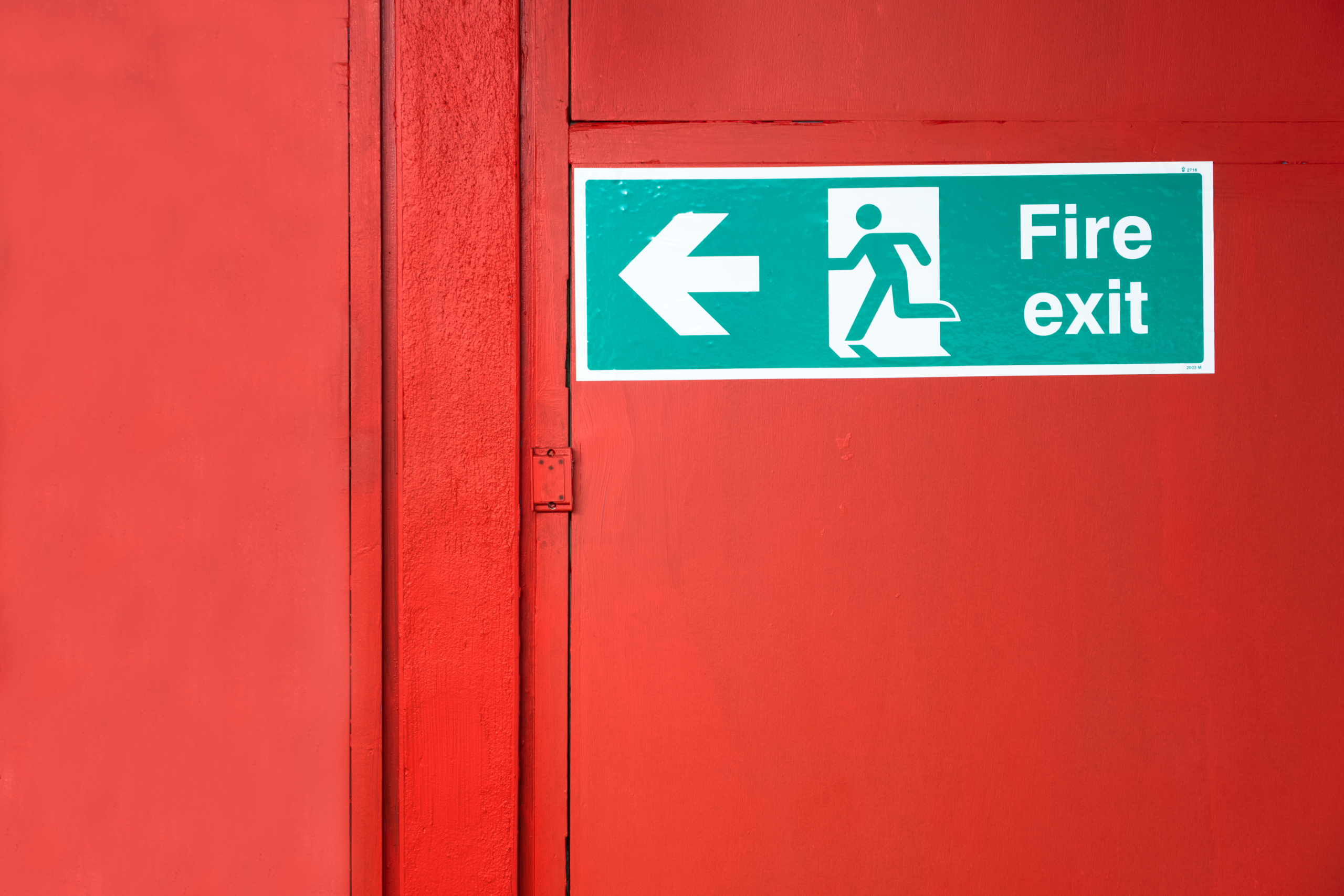
Emergency procedures start with awareness. Ensure all students know the location of the fire extinguisher, eyewash station, first-aid kit, and emergency exits.
Here are some basic procedures to teach students:
- Spills – Students should tell a teacher immediately if a spill occurs. They shouldn’t try to clean spills themselves.
- Fires – In the event of a fire, students shouldn’t stop to collect their belongings. They should head straight to the fire exits and follow the evacuation procedures.
- Splashes – If chemicals or other substances get in a student’s eyes, they should proceed to the eyewash station immediately.
- Injuries – Students should alert a teacher right away in the event of a burn, fall, or other injury.
Knowing what to do in an emergency reduces panic and helps students respond calmly. That’s not just a lab skill, it’s a life skill.
Testing Science Lab Safety Knowledge
Going over the science lab safety rules at the beginning of each term is essential, but it’s also important to reiterate the information before an experiment. A quick reminder ensures students are ready to work with confidence.
This doesn’t need to be time-consuming. A few verbal questions or a short quiz work well. The goal is to make safety a habit, not a one-off lesson.
You might also consider a safety checklist students can work through before they begin. This reinforces the science lab safety rules, gives students ownership of the process, and instils confidence before an experiment.
Conclusion
Firm lab safety rules don’t limit what students can do – they make it possible for them to do more. When students understand the rules and know how to respond in an emergency, they can approach every experiment with confidence. Keep the rules clear, revisit them regularly, and connect them to risks. The result is a lab culture rooted in safety and curiosity.