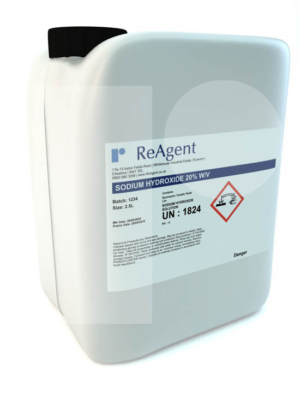
Our most popular product is displayed above. All variants of this product are displayed below.

Properties of Sodium Hydroxide

Sodium hydroxide, commonly known as caustic soda or lye, is one of the most widely used alkalis in both industry and laboratory chemistry. It is a highly caustic, hygroscopic, and exothermic compound that reacts readily with water, acids, and certain metals.

Here are the key physical and chemical properties of sodium hydroxide:

  • Chemical name: Sodium Hydroxide
  • Synonyms: Caustic Soda, Lye, Sodium Hydrate, NaOH Pellets or Pearls
  • Chemical formula: NaOH
  • CAS number: 1310-73-2
  • Appearance: White solid (flakes, pellets, or pearls)
  • Odour: Odourless
  • Molecular weight: 40.00 g/mol
  • Density (solid): 2.13 g/cm³
  • Melting point: 318°C
  • Boiling point: 1,388°C
  • Solubility: Highly soluble in water and ethanol; insoluble in nonpolar solvents
  • pH (1% solution): Approximately 13–14
  • Reactivity: Strongly alkaline and reacts vigorously with acids and water
  • Corrosiveness: Extremely corrosive to skin, eyes, and metals

Due to its strong alkalinity and reactive nature, sodium hydroxide must be handled with care. It is an essential reagent in neutralisation, cleaning, and saponification processes, as well as a vital ingredient in many manufacturing industries.

What Is Sodium Hydroxide Used For?

Sodium hydroxide is an indispensable industrial chemical with a vast range of uses across different industries. Its ability to neutralise acids, dissolve organic materials, and break down fats makes it one of the most versatile bases available.

Common uses of sodium hydroxide include:

  • Water treatment – Neutralising acidic waste streams and adjusting pH levels
  • Chemical manufacturing – Acting as a chemical solution, reagent or catalyst in the production of other alkalis, surfactants, and polymers
  • Pulp and paper industry – Used in the pulping process to separate lignin from cellulose fibres
  • Textile industry – Assists in bleaching, dyeing, and treating fabrics for coating services
  • Soap and detergent production – A key ingredient in saponification, converting fats and oils into soap
  • Cleaning and degreasing – Used in industrial-strength cleaners, drain unblockers, and degreasers due to its ability to break down organic residue
  • Petroleum refining – Removes acidic contaminants from hydrocarbons
  • Food processing (in regulated concentrations) – Used to peel fruits and vegetables or process cocoa and soft drinks

Sodium Hydroxide Hazards

Sodium hydroxide causes severe skin burns and eye damage, so great care should be taken when handling this hazardous chemical. We recommend wearing appropriate personal protective equipment including gloves, safety glasses and overalls when handling this product, even if still sealed in its original packaging.

When working with sodium hydroxide, appropriate Personal Protective Equipment (PPE) must be worn at all times, including:

  • Protective gloves and overalls
  • Safety goggles or a face shield
  • Closed, chemical-resistant footwear

Ensure the substance is handled only by trained personnel in well-ventilated areas. Even when sealed, containers should be treated with caution, as sodium hydroxide can absorb moisture from the air and generate heat when it reacts with water.

Please refer to the sodium hydroxide MSDS for detailed safety and precautionary information before handling the chemical.

Trusted Sodium Hydroxide Suppliers For almost 50 Years

If you’re wondering where to buy sodium hydroxide, look no further than ReAgent. We manufacture and supply a wide variety of sodium hydroxide products, including standard and reagent solutions.

Everything we manufacture is done to our ISO 9001 Quality Management Approved System, and has a 100% quality guarantee.

As a leading UK manufacturer and supplier of sodium hydroxide for almost 50 years, we are ideally placed to handle all of your enquiries.  Many of our customers now prefer the convenience and ease of being able to buy chemicals online.

However, if you would like to discuss your particular sodium hydroxide requirements with one of our Technical Sales Team, they are always here to help you and offer free technical advice and support. Just contact us below for more information.


Need Bespoke Chemicals?

ReAgent factory tour and rack of IBCs
Play Video

Watch this video to find out how ReAgent can help

ReAgent factory tour and rack of IBCs
Play Video
At ReAgent we manufacture, pack, and blend chemical products for companies across many different industries and distribute them around the world. The services we provide include:

How to place an order

ReAgent Chemicals Ordering
Play Video about ReAgent Chemicals Ordering
From our warehouse to your door, we take care of every detail. Watch our video to see how we handle off-the-shelf chemical orders with rigorous quality control, batch traceability, and expert ADR delivery.
ReAgent Chemicals Ordering
Play Video about ReAgent Chemicals Ordering

Watch this video to find out how to place an order

Sodium Hydroxide 0.1M (0.1N) FAQs

  • Do you supply sodium hydroxide in bulk?

    We offer sodium hydroxide in a variety of pack sizes so you can purchase exactly the amount you need. Bulk discounts are available for larger orders. To discuss your specific requirements and for more information on bulk purchases, please call us on 0800 9555 798.
  • How much is sodium hydroxide?

    Pricing is available at the top of this page. For bulk orders or if you have specific requirements, please contact us. Prices vary based on the grade and quantity you need, as well as your shipping requirements.
  • What grade of sodium hydroxide do I need?

    The grade of sodium hydroxide you need depends on your application. We offer a range of grades from commercial to pharma grades. If you’re unsure, our technical team can assist you.
  • What grades and concentrations of sodium hydroxide do you supply?

    We can supply technical, analytical, pharmaceutical, and food grades of sodium hydroxide in 0.1M, 10% w/w, 20% w/v, and 30% w/w concentrations. Contact us for other grades, as we may be able to source them for you.
  • How much sodium hydroxide can I order?

    Orders must meet a £100 minimum spend before VAT and shipping. There's no maximum limit; order as much as you need.
  • What are the delivery options for sodium hydroxide orders?

    We offer same-day, overnight, scheduled, and overseas deliveries. For other requirements, please call our team on 0800 9555 798.
  • How do you ensure the purity of the sodium hydroxide you supply?

    Our sodium hydroxide undergoes stringent testing against sales specifications. Certificates of Analysis (CoAs) are available on request, and we maintain ISO 9001 certification for quality assurance. We also offer a 100% quality guarantee.
  • What are the safety measures for handling sodium hydroxide?

    Please refer to the SDS for sodium hydroxide for safety information and perform a risk assessment for your specific application. Always wear appropriate PPE when handling chemicals.
  • Can you provide Material Safety Data Sheets (MSDS) for sodium hydroxide?

    Yes, you can download the SDSs for all grades of sodium hydroxide we supply here.
  • Do you offer custom formulations or packaging for sodium hydroxide?

    Yes, we can provide a bespoke blending and packaging service tailored to your needs. Call us on 0800 9555 798 to discuss your requirements.
  • Do you provide after-sale support when I buy sodium hydroxide from ReAgent?

    Our technical team is always on hand to provide after-sale support and answer any questions you may have. You can call them during business hours on Monday to Friday on 0800 9555 798.

Related resources

Cleaning cutlery in a white sink

How to Unblock a Sink Using Sodium Hydroxide

Sodium hydroxide (NaOH) is a strongly alkaline compound that appears as a white solid. It is commonly used in the manufacture of soap and detergents, but did you know that it can also help unblock your sink? Here’s how… Use

Read More »
Purple swirl of powder paint

What Does Sodium Hydroxide React With?

Sodium hydroxide (NaOH) is a strongly basic organic compound that is also very hygroscopic. Also known as caustic soda or lye, it reacts with a number of compounds to produce very different results. Dissolving in Water Sodium hydroxide ionises when

Read More »
An assortment of soaps in a dish

What is Sodium Hydroxide?

Also known as caustic soda or lye, sodium hydroxide is a diverse chemical compound that is used in the manufacture of everyday products like soaps, detergents and paper. It was even used by a famous serial killer to help destroy

Read More »
Cleaning cutlery in a white sink

How to Unblock a Sink Using Sodium Hydroxide

Sodium hydroxide (NaOH) is a strongly alkaline compound that appears as a white solid. It is commonly used in the manufacture of soap and detergents, but did you know that it can also help unblock your sink? Here’s how… Use

Read More »
Purple swirl of powder paint

What Does Sodium Hydroxide React With?

Sodium hydroxide (NaOH) is a strongly basic organic compound that is also very hygroscopic. Also known as caustic soda or lye, it reacts with a number of compounds to produce very different results. Dissolving in Water Sodium hydroxide ionises when

Read More »

Properties of Sodium Hydroxide

Sodium hydroxide, commonly known as caustic soda or lye, is one of the most widely used alkalis in both industry and laboratory chemistry. It is a highly caustic, hygroscopic, and exothermic compound that reacts readily with water, acids, and certain metals.

Here are the key physical and chemical properties of sodium hydroxide:

  • Chemical name: Sodium Hydroxide
  • Synonyms: Caustic Soda, Lye, Sodium Hydrate, NaOH Pellets or Pearls
  • Chemical formula: NaOH
  • CAS number: 1310-73-2
  • Appearance: White solid (flakes, pellets, or pearls)
  • Odour: Odourless
  • Molecular weight: 40.00 g/mol
  • Density (solid): 2.13 g/cm³
  • Melting point: 318°C
  • Boiling point: 1,388°C
  • Solubility: Highly soluble in water and ethanol; insoluble in nonpolar solvents
  • pH (1% solution): Approximately 13–14
  • Reactivity: Strongly alkaline and reacts vigorously with acids and water
  • Corrosiveness: Extremely corrosive to skin, eyes, and metals

Due to its strong alkalinity and reactive nature, sodium hydroxide must be handled with care. It is an essential reagent in neutralisation, cleaning, and saponification processes, as well as a vital ingredient in many manufacturing industries.

What Is Sodium Hydroxide Used For?

Sodium hydroxide is an indispensable industrial chemical with a vast range of uses across different industries. Its ability to neutralise acids, dissolve organic materials, and break down fats makes it one of the most versatile bases available.

Common uses of sodium hydroxide include:

  • Water treatment – Neutralising acidic waste streams and adjusting pH levels
  • Chemical manufacturing – Acting as a chemical solution, reagent or catalyst in the production of other alkalis, surfactants, and polymers
  • Pulp and paper industry – Used in the pulping process to separate lignin from cellulose fibres
  • Textile industry – Assists in bleaching, dyeing, and treating fabrics for coating services
  • Soap and detergent production – A key ingredient in saponification, converting fats and oils into soap
  • Cleaning and degreasing – Used in industrial-strength cleaners, drain unblockers, and degreasers due to its ability to break down organic residue
  • Petroleum refining – Removes acidic contaminants from hydrocarbons
  • Food processing (in regulated concentrations) – Used to peel fruits and vegetables or process cocoa and soft drinks

Sodium Hydroxide Hazards

Sodium hydroxide causes severe skin burns and eye damage, so great care should be taken when handling this hazardous chemical. We recommend wearing appropriate personal protective equipment including gloves, safety glasses and overalls when handling this product, even if still sealed in its original packaging.

When working with sodium hydroxide, appropriate Personal Protective Equipment (PPE) must be worn at all times, including:

  • Protective gloves and overalls
  • Safety goggles or a face shield
  • Closed, chemical-resistant footwear

Ensure the substance is handled only by trained personnel in well-ventilated areas. Even when sealed, containers should be treated with caution, as sodium hydroxide can absorb moisture from the air and generate heat when it reacts with water.

Please refer to the sodium hydroxide MSDS for detailed safety and precautionary information before handling the chemical.

Trusted Sodium Hydroxide Suppliers For almost 50 Years

If you’re wondering where to buy sodium hydroxide, look no further than ReAgent. We manufacture and supply a wide variety of sodium hydroxide products, including standard and reagent solutions.

Everything we manufacture is done to our ISO 9001 Quality Management Approved System, and has a 100% quality guarantee.

As a leading UK manufacturer and supplier of sodium hydroxide for almost 50 years, we are ideally placed to handle all of your enquiries.  Many of our customers now prefer the convenience and ease of being able to buy chemicals online.

However, if you would like to discuss your particular sodium hydroxide requirements with one of our Technical Sales Team, they are always here to help you and offer free technical advice and support. Just contact us below for more information.

Filter