
Is your young one already showing an interest in science, technology, engineering, and maths (STEM)? As a parent, you can nurture this curiosity at home with experiments that incorporate simple chemical solutions and other science-based concepts.
Active learning focuses on hands-on engagement rather than traditional lecturing. It gives children the opportunity to get their hands dirty, explore independently, and learn to problem-solve on their own. Promoting this type of learning at home creates a healthy educational balance when coupled with classroom lessons.
This article examines the benefits of STEM education and how you can make active learning a part of your child’s life outside of school.
In this post:
Key Takeaways
Successful STEM activities for kids support experimentation, testing, problem-solving, and early-stage critical thinking
STEM activities help children develop relevant, real-world skills and view failures as learning opportunities instead of setbacks
Parents can easily create an at-home STEM environment without a significant financial investment
STEM activities must align with a child’s age and cognitive/emotional development
Key Qualities of a STEM Activity
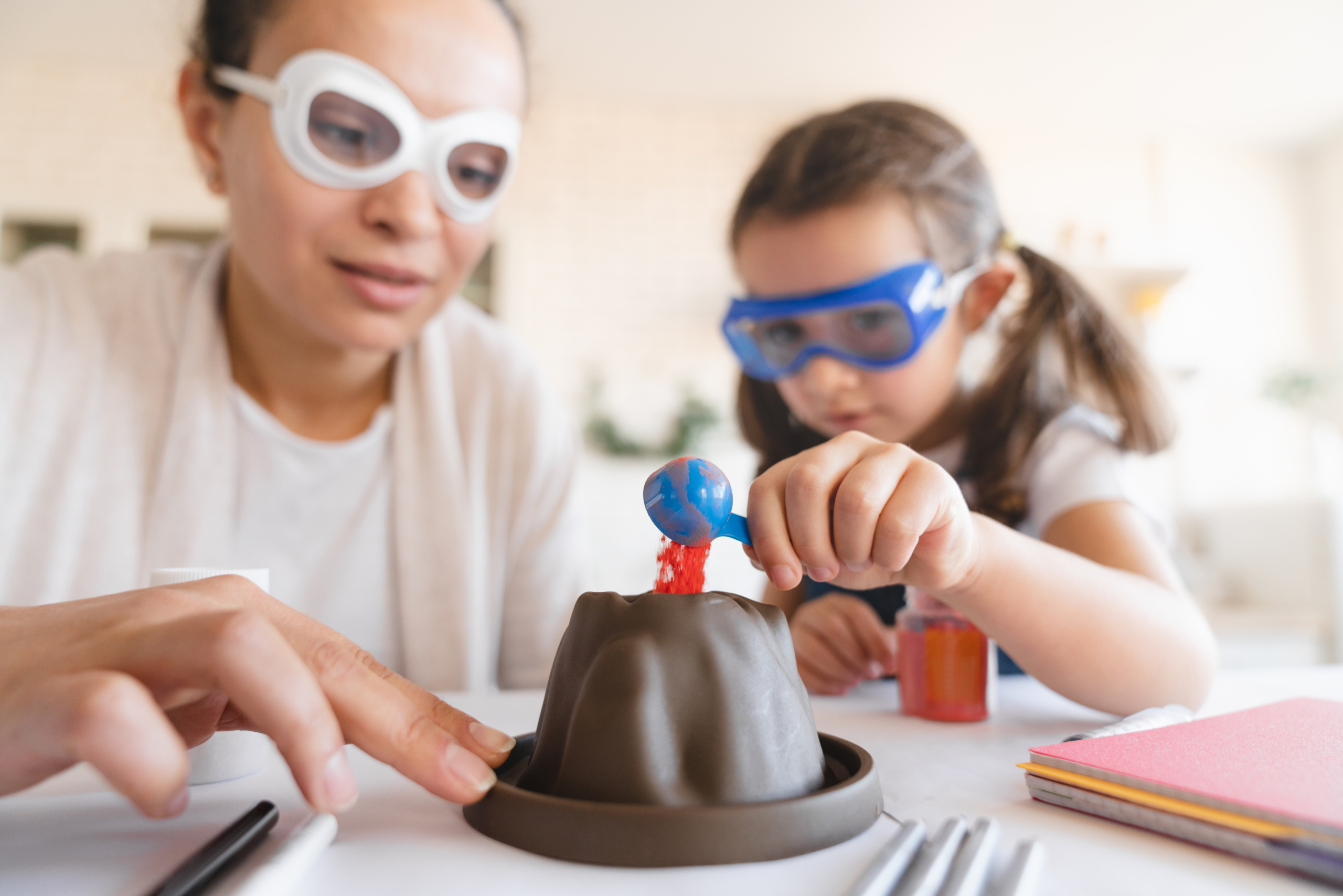
Science, technology, engineering, and maths are part of the primary school curriculum. Teachers conduct classroom lessons that form a foundational understanding of these topics. Experiments give students a chance to apply this knowledge and observe real-world outcomes.
Conducted successfully, STEM activities for kids achieve several things:
- They allow children to enjoy hands-on involvement through experimentation.
- Kids can make real-world connections to complex, often abstract, scientific topics.
- They allow kids to form simple hypotheses and test their theories without the fear of failing or making a poor grade.
- They promote problem-solving and critical thinking.
- Children can develop a better understanding of the relationship between STEM topics and nature.
- They require kids to develop observation skills, record their findings, and communicate what they’ve learned.
At-home STEM activities shift the educational focus from memorisation to active discovery. As a parent, you have the chance to spark your child’s natural curiosity, which could lead to a career in science or a field they genuinely love.
Why Are STEM Activities Important For Kids?
Every child learns differently. It’s up to teachers and parents to provide a varied educational landscape where kids can thrive.
STEM activities for kids develop strong problem-solving skills that students can apply to all aspects of life. They also teach them to view failures as learning opportunities rather than personal setbacks. This mindset shift at an early age is crucial for cognitive and emotional development.
STEM activities also encourage an interest in topics that are relevant today. For example, children who excel in tech-related skills, science, engineering, and analytical math may go on to do great things that impact entire cultures.
When teachers and parents give kids the tools they need to think critically and work collaboratively, they’re nurturing the next generation of innovative thinkers who can foster positive change.
Creating a STEM-Friendly Environment at Home
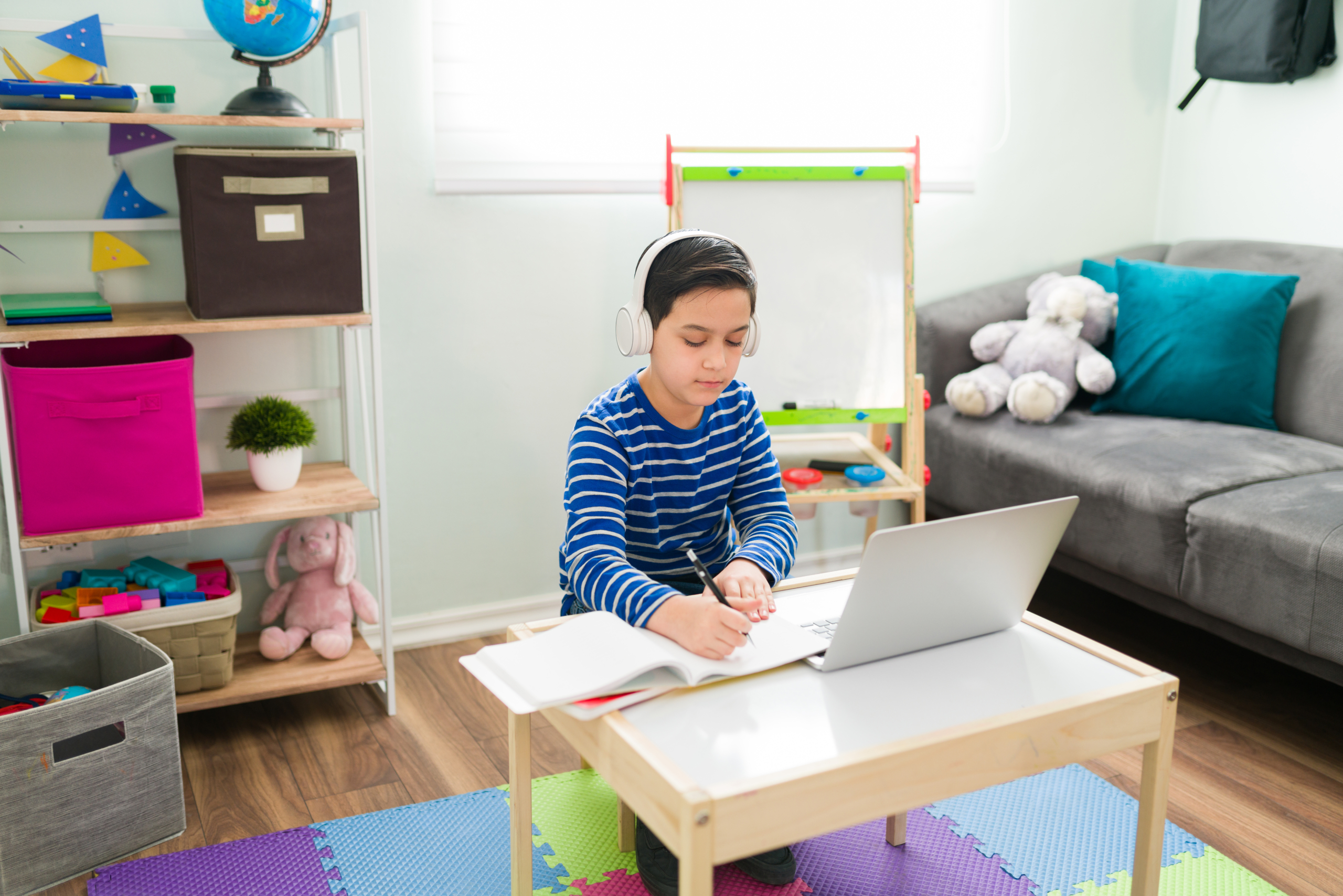
You may not know where to start after deciding to weave at-home STEM learning into your child’s home life. The good news is that it’s a lot simpler than it seems.
Start by assembling basic supplies. STEM activities for kids don’t require advanced lab equipment. In fact, you probably already have many of the items you’ll use for fun science experiments.
Items needed for a wide range of STEM activities include:
- Measuring cups
- A simple kitchen scale
- Scissors
- Glue
- Rulers
- Tape
- Pencils, pens, and markers
- A magnifying glass
- A notebook for recording results
Having these items on hand and letting your child know they can use them lets your child know you’re promoting an active learning environment.
It’s also important to form a positive and encouraging approach to discovery and problem-solving. When your child asks a question about the natural world, investigate the answer together instead of dismissing their curiosity because you don’t have a quick answer. You’ll likely find that your child reacts to and adopts your intuitive attitude.
A Dedicated STEM Learning Area
Children love to have their own workspaces. They feel more comfortable exploring in a safe environment that they can take ownership of. A designated learning area also helps your child focus on their work without distractions.
You don’t need a huge room to create a STEM learning area. A small desk with essential tools is fine. Work with your child on organising their supplies in plastic tubs or cubbies.
If possible, create a space in an area that gets plenty of natural light. This reduces eye strain and helps improve your child’s mood.
A dedicated learning space shows your child that you value their educational pursuits. It gives them a safe space to make a mess while building. They’ll be more likely to willingly engage in their favourite STEM activities for kids during their free time.
At-Home STEM Activities Based on Age

Before organising STEM activities for kids, it’s important to understand the level at which you should challenge your child. Tailoring projects to their age ensures they stay engaged without feeling overwhelmed.
The following age-appropriate STEM activities for kids are easy to organise at home.
STEM Activities for Ages 4–6
Young children learn best through play and physical interaction. The best STEM activities centre around stimulating sensory exploration and foundational concepts.
Easy sink or float experiments that explore basic physics and buoyancy are perfect for this age group. Fill a large bowl or container with water and gather a range of items like coins, plastic toys, and wooden objects. Ask your child to predict whether each item will sink or float, then discuss the results.
Interactive outdoor experiments are also great for young children. For example, a nature scavenger hunt develops a child’s observation and categorisation skills. Simply create a list of flowers, rocks, and insects and have your child find and analyse them.
STEM Activities for Ages 7–10
By this age, children have developed more motor skills and longer attention spans. STEM activities for kids at this age can include basic data recording and more complex tech and engineering topics.
Building a homemade water filter is an excellent way to explore basic filtration. Cut a plastic bottle in half and turn it upside down. Have your child fill it with layers of gravel and sand. Poor muddy water into the filter and observe the speed at which it moves through each layer.
Building a balloon-powered car demonstrates kinetic energy and fundamental laws of motion. Use sturdy cardboard for the body and bottle tops for wheels. Attach a balloon to a drinking straw, tape it to the car, and let escaping air propel the vehicle forward while your child measures the distance travelled.
STEM Activities for Ages 11–14
When a student reaches secondary school, they should start taking on STEM projects that involve more complex, real-world issues. By this age, they’re able to follow detailed instructions and safely use standard household tools and science equipment.
If your child is a budding chemist, they can perform the glowing iodine experiment to explore chemical kinetics.
Create a solution by crushing a vitamin C tablet into 2 ounces of warm water, filtering the solids, and adding one teaspoon of iodine. Make a second solution by mixing two ounces of warm water, one teaspoon of hydrogen peroxide, and half a teaspoon of liquid starch. Pour the first solution into the second, then pour the liquid back and forth between cups a few times, observing how it turns a deep blue.
To teach your child the basics of thermal and sustainable energy, construct a functional solar oven. Have them line a clean pizza box with aluminium foil and make a viewing window using cling film. Place a plate with a piece of cheese inside the solar oven, put it in direct sunlight, and watch as the cheese melts.
How To Make At-Home STEM Activities Fun

We were all kids once, so we know that the more fun they have, the more interesting it is to young minds. That’s why it’s important to keep your at-home learning atmosphere light and engaging.
STEM activities for kids should focus on your child’s personal interests. If your child loves computers, look for free beginner coding programmes online. If they gravitate toward animals and nurture, build a bird feeder so they can observe and record wildlife.
As a rule, stay enthusiastic and embrace the following habits:
- Praise your child’s efforts and problem-solving process throughout the entire activity.
- Join in on the fun during some activities to show you enjoy learning with them.
- Don’t overcorrect your child and allow them the freedom to make a mess while experimenting.
Making learning enjoyable ensures your child will eagerly anticipate their next round of STEM activities for kids.
Conclusion
Fostering a genuine love of STEM topics at home builds vital skills for your child’s future. By creating a supportive physical environment and trying fun, active learning projects, you encourage independent curiosity. Start today and watch your child’s academic confidence grow.