
From industrial pulp bleaching and high-tech semiconductor manufacturing to wastewater treatment, hydrogen peroxide is one of the world’s most versatile chemical compounds. In addition to commercial applications, it’s used for everyday purposes such as household cleaning and mould removal.
The molecular structure of hydrogen peroxide is essentially water with an extra oxygen atom. It’s often referred to as a “green chemical,” as it leaves no toxic chemical residues behind unless solvents are added.
While hydrogen peroxide has a simple structure, mass-producing it involves an intricate, controlled chemical process. Let’s have a closer look at how it’s made.
Key Takeaways
Commercial hydrogen peroxide has a simple chemical formula, but making it isn’t as straightforward
The anthraquinone process is used to produce commercial hydrogen peroxide
Potassium iodide catalyses the rapid decomposition of hydrogen peroxide, producing oxygen that creates foam when trapped by soap
The strong oxidising properties of hydrogen peroxide make safe storage crucial
In this post:
The Production Process
Over 99% of the world’s commercial hydrogen peroxide is manufactured using a specialised autoxidation method known as the anthraquinone process.
While the overall equation for this process is fairly simple, there’s a lot to it.
Directly combining hydrogen and oxygen gases at an industrial scale presents major explosion hazards and requires highly specialised catalysts and controls. Instead, the anthraquinone process relies on a complex chemical cycle to safely transfer hydrogen atoms onto atmospheric oxygen.
The Step-by-Step Anthraquinone Process
Hydrogen peroxide has an interesting history. It was first discovered in 1818, and the anthraquinone process was developed in the late 1930s. This became the dominant industrial manufacturing method after World War II.
The anthraquinone process acts as a continuous loop. Rather than consuming the heavy organic molecules involved, they’re continuously recycled to generate a high-yield output.
In the presence of oxygen, the anthrahydroquinone oxidises. This is normally done by bubbling compressed air through the solution. The oxygen molecules react with the solution to produce hydrogen peroxide, which is then extracted into water so it can be safely concentrated and purified.

Step 1 – Hydrogenation
The process starts with an alkylanthraquinone (such as 2-ethylanthraquinone) dissolved in a specialised working solution consisting of a blend of polar and non-polar organic solvents.
Hydrogen gas is introduced to this mixture in the presence of a precious metal catalyst, typically palladium. The hydrogen reacts with the anthraquinone, reducing it to anthrahydroquinone.
Step 2 – Filtration
The working solution is thoroughly filtered to separate and protect the valuable palladium catalyst, ensuring it can be reused in the next cycle.
Step 3 – Oxidation
Compressed air is bubbled through the anthrahydroquinone solution. Without needing an expensive catalyst, a spontaneous autoxidation reaction occurs.
The oxygen from the air reacts with the anthrahydroquinone, pulling the hydrogen atoms away from its chemical structure. This reverts the molecule back into its original anthraquinone state while simultaneously synthesising hydrogen peroxide.
Step 4 – Liquid Extraction
At this stage, the newly formed hydrogen peroxide remains trapped inside the organic working solution. Because it’s highly soluble in water, the organic mixture is pumped into an extraction column alongside pure water.
The water extracts the hydrogen peroxide out of the organic layer. The organic working solution is then separated, dried, and cycled back to the beginning of the hydrogenation stage.
Step 5 – Purification
The resulting aqueous solution typically yields about 30% to 40% hydrogen peroxide. To achieve commercial industrial grades (such as 50% or 70%), the mixture undergoes vacuum distillation, which evaporates excess water at low temperatures to prevent thermal decomposition.
In industrial manufacturing environments, micro-doses of chemical stabilisers, such as sodium stannate or various organic phosphates, are added to ensure safe transport and storage.
Safely Storing Hydrogen Peroxide
Because of its strong oxidising properties, high-concentration hydrogen peroxide requires robust safety protocols. It’s non-flammable, but can violently accelerate existing fires and cause spontaneous combustion if it comes into contact with organic materials like wood, paper, or clothing.
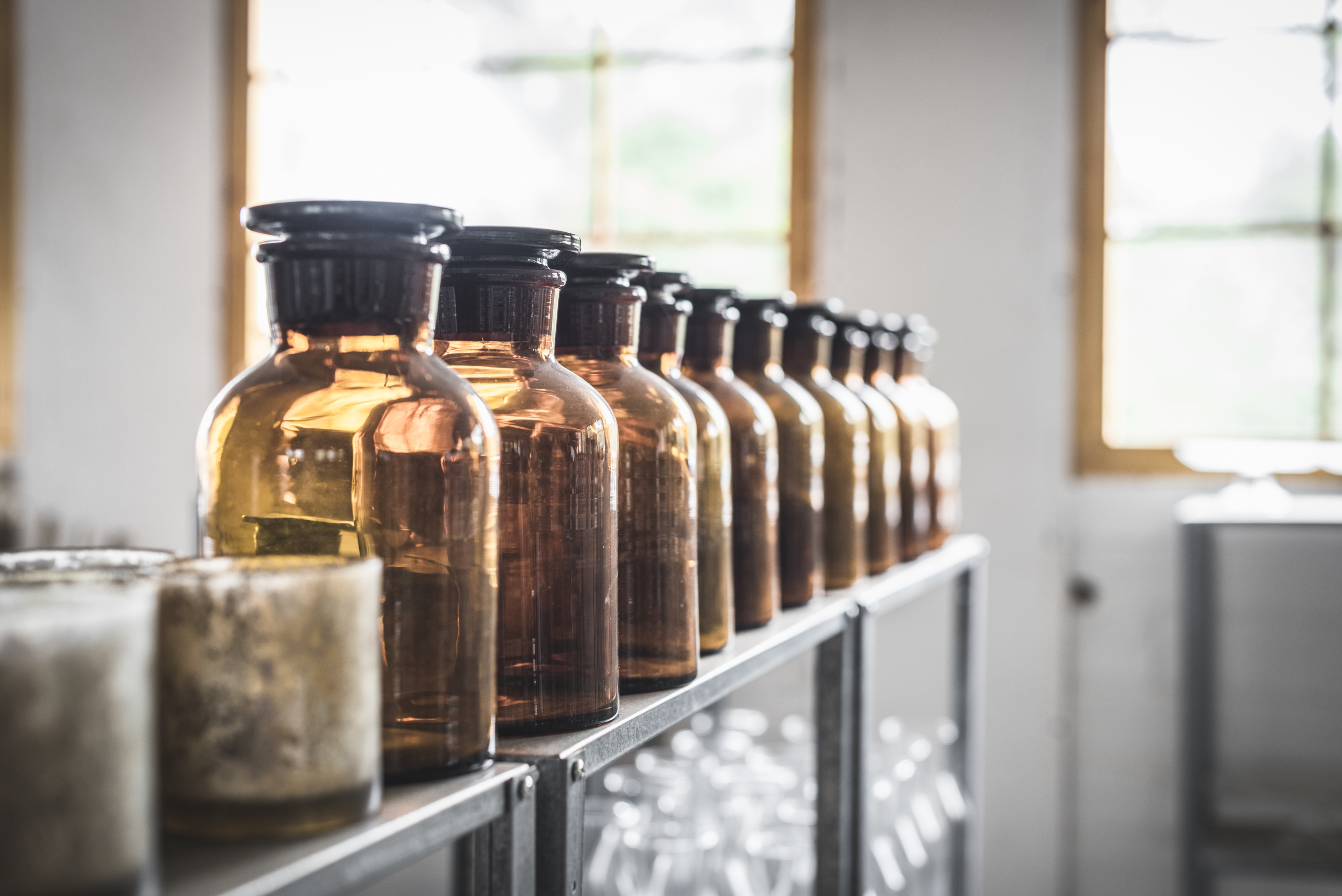
Hydrogen peroxide should be stored in a cool (between 5-25°C), dry area away from heat and direct sunlight. While small amounts of low-concentration household peroxide can be kept in dark glass bottles, high-concentration industrial grades should be stored in compatible high-density plastics (like HDPE) or specially treated aluminium and stainless steel. Industrial containers must have vented caps to prevent pressure buildup, as glass containers can shatter if oxygen gas accumulates.
What Makes Hydrogen Peroxide Foam?
When hydrogen peroxide comes into contact with certain compounds, it breaks down. In the popular elephant toothpaste experiment, liquid dish soap is mixed with a hydrogen peroxide solution. Then, a solution of potassium iodide is added.
The iodide ion acts as a highly efficient catalyst. It accelerates the rate at which hydrogen peroxide sheds its extra oxygen atom. The sudden, massive volume of released oxygen gas becomes instantly trapped by the dish soap, causing a thick, warm column of foam to shoot meters into the air.
Conclusion
While hydrogen peroxide has a simple molecular structure, its mass production relies on the anthraquinone process to safely yield commercial grades. From industrial-scale hydrogenation to dramatic foam-producing reactions, managing this powerful oxidiser requires careful chemical control and strict storage protocols. Ultimately, this intricate balance of chemistry is what makes hydrogen peroxide such a versatile tool across many industries.