
Acetone is both a household and industrial chemical with a wide range of applications. In many settings, it’s indispensable. For example, a beauty salon couldn’t effectively provide services to their customers without it, as acetone is used as nail polish remover.
Similarly, acetone is essential in the electronics industry. Computer chips, circuit boards, and other electronic components require acetone as a cleaning agent. It is used for cleaning circuit boards and other components because it can effectively remove residue without causing damage to other materials.
In this post:
Key Takeaways
Acetone is widely used across household, commercial, laboratory, and industrial settings
It comes in three main types: analytical, general, and laboratory grade – choose based on purity needs
Pack size matters: 2.5–30L suits small businesses, while 200L drums are ideal for industrial use
Key purchasing considerations include purity grade, storage requirements, and safe handling
Acetone must be stored in a cool, ventilated, ignition-free environment and handled with proper PPE
Use accredited suppliers – such as Chemicals.co.uk – for reliable quality and compliance
Understanding Acetone Variations
Acetone comes in three main variations: analytical use, general use, and laboratory use. That’s because it has various applications, mainly as a solvent and a reagent.
The concentration of acetone you should buy will depend on how you plan to use it.
Analytical Use Acetone
Analytical research grade acetone has the purest quality. One of the main applications of this type of acetone is as a solvent for analytical methods, including medical applications.

For example, it’s used to prepare samples for infrared spectroscopy and nuclear magnetic resonance. Analytical use acetone is very useful when it comes to dissolving small organic molecules from solid samples.
General Use Acetone
Acetone for general use has the highest impurity level of all the different types of acetone. It’s generally used as a solvent for cleaning and thinning. For instance, it can easily clean polyester resin brushes and surfaces.
It’s also a good degreaser for surfaces before painting, and it can clean surfaces in preparation for silicone castings. Small amounts of general use acetone can also be used to thin epoxy resins and polyurethane resins for surface applications. And of course, it’s well-known that acetone is used to remove nail polish, paint, and varnish.

Laboratory Use Acetone
Aside from using acetone as a laboratory test reagent or molecular sample solvent, it’s also commonly used in laboratories as a cleaning agent.

For example, acetone is good for removing chemical residues and solids as it can easily evaporate and remove any trace of water in glass equipment.
Choosing the Right Pack Size
The right pack size is one of the important things to consider when you are buying acetone. Whether you need it for your small business (e.g. a beauty salon), school laboratory supply, or industrial purposes, the right pack size matters.
Small to Medium Pack Sizes (2.5L to 30L)
Small to medium pack sizes of acetone will probably be right for you if you have a shop or a small business. These packs are ideal for small-scale applications like house painting jobs and repairs. You can store them in your garage, basement workshop, or storage area of your small business. Just make sure to take all necessary precautions to prevent fire, such as keeping them away from sources of ignition.
Bulk Purchases (200L Drum)
If you have a manufacturing plant or industrial processing facility that requires acetone, you may need to purchase it in bulk (and it’s more generally cost-effective that way).
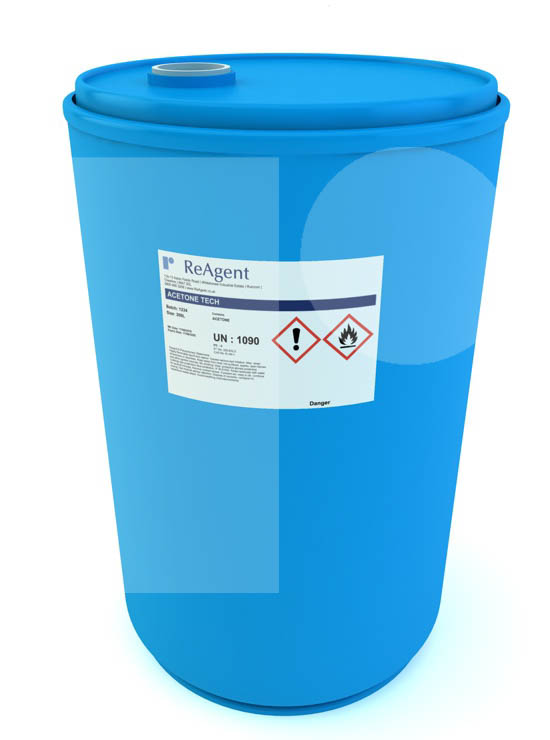
Whether you are using it as a cleaning agent, an ingredient, or a reagent for your manufacturing processes, bigger pack sizes will probably better suit your needs in these environments.
Custom Quantities for Specific Needs
Whether your need is small or large, if you have a specific requirement, it’s probably best to order a custom quantity of acetone so you get the exact amount you need.
Where to Buy Acetone
If you only need to buy acetone as a nail polish remover or for other domestic use, you can easily find it in pharmacies and supermarkets.
However, if you’re a business looking for USP grade, industrial, or laboratory reagent grade acetone, you’ll need to buy it from specialist chemical manufacturers. It’s important to compare prices, logistical services, and reputation, and also find a supplier that can provide bulk size or custom size packaging.
Benefits of Purchasing Acetone Online
Most chemical manufacturers and suppliers have an online presence, including an online store from which you can purchase acetone. Here are some benefits of purchasing acetone online:
- Convenience is the obvious benefit. It’s certainly less hassle than finding the exact amount of acetone you need in a shop.
- You’ll also get a wider range of options. It’s easy to compare various suppliers and choose the best option for your needs.
- You also get the convenience of delivery to wherever you are.
Why Choose Chemicals.co.uk as your Acetone supplier?
At ReAgent, we have more than fifty years of experience and expertise when it comes to chemical manufacturing, including supplying acetone.

We have state-of-the-art facilities and a team of experts who ensure high quality acetone that’s compliant to international standards. We also provide excellent customer service, reliable logistics, and support for storage, delivery, and custom orders.
Please note that we only supply chemicals to businesses.
Considerations When Buying Acetone
There are several factors that you should consider when buying acetone. Depending on your need and purpose, you should primarily consider the quality of acetone in terms of purity. This is especially true if you intend to use it for laboratory and manufacturing purposes.
Purity Requirements
In terms of purity requirements, refer to the UK chemical grade system. This system generally includes four levels.
- Technical grade is the lowest chemical grade in terms of purity. This covers the type of acetone that’s typically used for cleaning and degreasing purposes.
- The GRG, or General Reagent Grade, is suitable for laboratory use and household purposes.
- The BP grade conforms to the standards set by the British Pharmacopoeia and is suitable for laboratory and manufacturing purposes.
- Finally, the Analytical Research Grade is the highest in purity and suitable for specialist laboratory testing in terms of precision.
Safety and Storage
As a highly volatile, flammable, and toxic chemical, acetone needs to be handled, used, and stored safely.
The product you buy must be in a sealed container with a proper label. It must be stored in an area that has the appropriate temperature and has no source of ignition, such as sparks or flame.
For more information on the safety and storage of acetone, refer to the Safety Data Sheet.
Delivery and Handling
Acetone should be delivered using a vehicle that is equipped with safety equipment, such as fire extinguishers, by a registered courier.
The path and schedule of delivery must be properly planned and must be undertaken by professionals who know how to handle hazardous chemicals.
Using Acetone Safely
When using acetone for cosmetic, painting, laboratory, or industrial purposes, you should always consider that it is a hazardous chemical and can be harmful. It is flammable and toxic, can irritate the skin, and may cause damage to the eyes and lungs. It can also cause poisoning when ingested.
Safety Tips for Handling Acetone
- Avoid contact with your skin and eyes – although it easily evaporates, acetone can still cause irritation
- Avoid inhaling the fumes – it’s best to only use acetone in a well-ventilated space
- Wear protective equipment when handling acetone in large quantities
Storage Recommendations
Acetone must be stored in a room that has internal climate control. Ideally, it must be stored in a room with an ambient temperature between 15 and 25 degrees Celsius.
All sources of possible ignition must be removed, including faulty electrical wirings and switches. The room must be well-ventilated to allow fumes to escape. There should also be fire extinguishers at the ready.
Conclusion
Acetone is a volatile, flammable, and toxic chemical that has several applications, including for household, commercial, laboratory, and industrial. There are several things to consider when purchasing acetone, such as the chemical grade, safety, and how much acetone you require.