The Chemistry Blog

Chemical uses, chemistry information and industry news

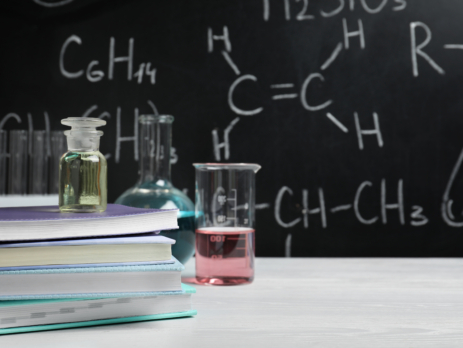
Making Chemistry Fun: KS2 & KS3 Science Experiments for Schools

Young students often perceive chemistry as complex, highly mathematical, and data-driven. And while maths and analytics play an important role in chemical reactions, acids, and molecular processes, there’s another side to the subject - and it’s lots of fun.Conducting hands-on science experiments at Key Stage 2 (KS2) and Key Stage 3 (KS3) gives kids a glimpse into the magical world...

What Happens When Hydrochloric Acid and Sodium Thiosulphate React?

A fascinating transformation occurs when clear solutions of hydrochloric acid (HCl) and sodium thiosulphate (Na2S2O3) are combined. The transparent liquid gradually turns cloudy, milky, and completely opaque.This may seem like a simple reaction, but what’s actually going on? And how does this relate to chemical kinetics (how fast a reaction occurs)?This article explores the science behind the reaction and how...

A Guide to Developing STEM Skills at Home

Science, technology, engineering, and mathematics (STEM) skills are invaluable in our ever-advancing technological world. Whether your child wants to learn about chemicals and chemical reactions or expresses an interest in aerospace, STEM education will turn their interests into passions.Promoting STEM education at home supports organic learning beyond the classroom. It can also pave the way to an exciting career in...

The Best Chemistry Graduate Schemes in the UK

If you’ve earned a chemistry degree, graduate schemes are an excellent way to learn on the job. They allow you to expand your knowledge of chemicals and their real-world applications.The best chemistry graduate schemes are generally entry-level jobs that include training on different aspects of company operations. This provides a well-rounded overview of how companies use chemicals, as well as...

Clearing Up 5 Common Chemistry Misconceptions

Chemistry is everywhere. It’s active in the air in our lungs, the products on our bathroom shelf, and the food on our plate. Even deionised water is considered a chemical.Still, chemistry remains one of the most misunderstood subjects in the natural and man-made world.Misconceptions about chemicals and basic chemistry processes spread easily, often starting in the primary school classroom. They’re...

Primary Science Curriculum: A Guide for Teachers

Our world needs more scientists. They work to solve major challenges like climate change, unlock mysteries of the natural world, and explore safer ways to use essential chemicals in everyday products.This is why teaching scientific literacy at an early age is so important. It instils children with an intimate understanding of the world around them while sparking a curiosity to...

How Is Copper Sulphate Made?

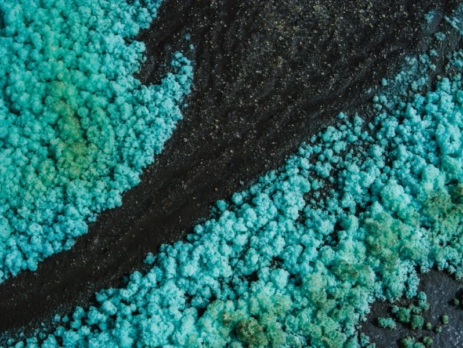
Copper sulphate is an inorganic compound – a salt of sulfuric acid and copper. It is known for its unique appearance, as bright blue, water-soluble crystals. This is why it’s commonly known as blue vitriol. This useful compound has applications

Outdoor Learning: Easy Science Experiments for Primary School Teachers

There’s a wealth of scientific knowledge just outside the classroom doors. Primary school teachers can tap into it with easy science experiments that investigate organic chemical reactions and the natural world.Outdoor learning offers many benefits to young students. It reduces stress, improves their relationship with nature, and supports independent thinking.Teaching outside gives children the freedom to explore scientific concepts in...

How To Remove Labels with Rubbing Alcohol

It seems that almost everything we buy nowadays comes with those annoying sticky labels that are virtually impossible to remove. And even if you manage to peel off the label, then there’s the problem of the sticky residue left behind. Unfortunately, warm soapy water is not enough to completely remove this residue in most cases. You may end up spending hours...

About The Chemistry Blog

At The Chemistry Blog, we want to inform and educate people about chemistry, the chemical industry, and the uses, benefits, and applications of different chemicals, from isopropyl alcohol and buffers to standard solutions. No matter what it is you’re looking for, you’ll find plenty of chemical information here.

The Chemistry Blog is also home to a massive range of educational resources. Whether you’re studying for your upcoming GCSE or A level exam, or want to know more about how to pursue a degree in chemistry, there’s a wealth of information at your fingertips. Beyond this, our series of articles on apprenticeships in the chemical industry help equip aspiring scientists with the knowledge they need to take that next step in their career.

The Chemistry Blog also provides information on specific fields in the chemical industry, from biotechnology to biochemistry to analytical chemistry, and explores the science behind key topics and chemical phenomena, like titration and distillation. Plus, if you’re looking to grapple with more complex subjects, feed your appetite with articles like the decomposition of hydrogen peroxide or the reaction between hydrochloric acid and sodium thiosulphate.

But you don’t have to be a science pro or student to enjoy what we have on The Chemistry Blog. Have you ever wondered about the chemicals in swimming pools or oven cleaners? Do you want to get the most out of that jar of baking soda in your cupboard, or learn how to remove sticky labels using some rubbing alcohol? The Chemistry Blog is home to tons of articles that explore the applications and science behind common household chemicals so that you can better understand the things you use everyday. So, whether you’re a student, a science buff, or simply curious, there’s something for everyone on The Chemistry Blog!


How can ReAgent help you?

Send us a message and our friendly team will get back to you within one business day.

What happens to my enquiry?

Your message is sent directly to our dedicated customer service support team where it is distributed to the department best suited to help you. During office hours one of our staff members will promptly email you back or give you a quick call to discuss your requirements or respond to your question. All without obligation or sales pressure. We are here to help you, and are dedicated to “above and beyond” levels of customer service.

Prefer to call?

Call us FREE on 0800 9555 798. Overseas? Call +44 1928 716903. Available 8:30am – 5pm, Monday to Friday.

Customer Service
“All enquiries are treated as confidential – we never share your details”
Kerry
Customer Service
Sales Director
“Our manufacturing facility is accredited to ISO 9001, ISO 13485, ISO 14001 and ISO 45001”
Darren
Technical Director
Account Director

“We provide comprehensive technical support with every enquiry”
Jo
Account Director

Jane Fletcher
Google
5/5
Always have excellent service from yourselves from ordering product to delivery.
Kevin Wallcroft
Google
5/5
A particularly easy to deal with chemical company. I telephoned, got all the advice needed with excellent friendly service. My chemicals arrived the very next day. Very happy!
Joanne King
Google
5/5
Fast efficient service, was kept updated on order throughout. Can not fault ReAgent sales and delivery processes.
Hebe Arat
Google
5/5
Their customer services were very helpful, sending us all the lab reports we needed, before we even bought from them. Then, once we ordered the product came very quickly.

Search the chemicals you need by product name, product number, or CAS number:

Making Chemistry Fun: KS2 & KS3 Science Experiments for Schools