The Chemistry Blog

Chemical uses, chemistry information and industry news

A Level Chemistry Revision: Physical Chemistry – Equilibrium Constant Kp For Homogeneous Systems

Analysing the chemical reactions of gases in homogeneous systems may seem daunting at first. Unlike a liquid solution, the volume of gas isn’t constant, so determining the concentration of specific gas reactants is difficult when you base it on volume. This is where the concepts related to the equilibrium constant Kp for homogeneous systems of gases come into play.However, before...

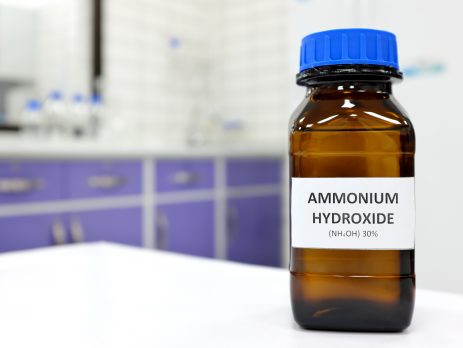
What is Ammonium Hydroxide?

Ammonium hydroxide is a basic or alkaline solution of ammonia which has several applications, such as cleaning windows, treating water, producing alkyl amine, and processing food. It also has some use in the laboratory for qualitative inorganic analysis, and can be used as a chemical indicator.Ammonium hydroxide is otherwise known as ammonia solution, ammonia water, ammonia liquor, or aqua ammonia....

A Level Chemistry Revision: Physical Chemistry – Rate Equations

Determining the rate of chemical reactions can be done using rate equations, no matter what type of chemical reaction is taking place.Rate equations are crucial diagnostic tools that are used to analyse the efficiency of chemical reactions. For example, rate equations can be used by chemical manufacturing companies who need their processes to be as efficient as possible so that...

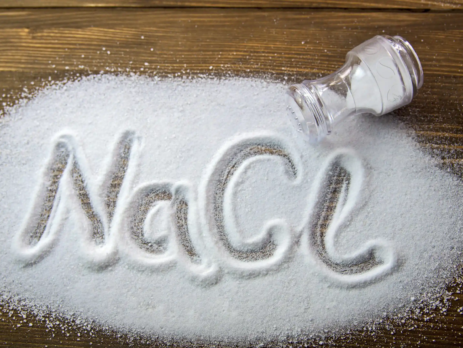
What is Sodium Chloride?

Sodium chloride (NaCl), more popularly known as table salt, is one of the most common and important minerals on earth with culinary, commercial, and industrial value. This ionic compound is also essential to life. Many biological organisms would be unable to function properly without sodium chloride as an electrolyte component of cells, tissues, and systems.Sodium chloride is also crucial to...

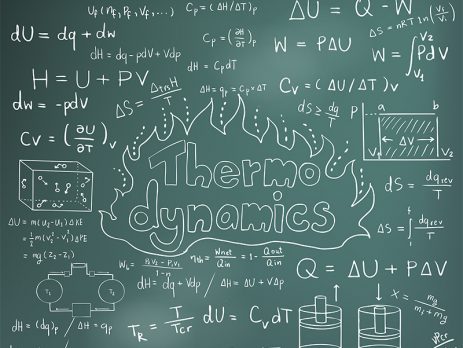
A Level Chemistry Revision: Physical Chemistry – Thermodynamics

Thermodynamics is the study of how energy, particularly heat, dissipates in a system, and how the mass of substances flows as they’re converted from one form to another. In chemistry, thermodynamics is focused on how energy is transferred and transformed during chemical reactions. Studying thermodynamics allows A level chemistry students to understand how energy flows in a system. Your revision in...

What is Methylene Chloride Used For?

Methylene chloride can dissolve organic compounds, making it very useful as an industrial solvent for many industrial processes. In the food industry, for example, it’s used in the process of extracting caffeine from coffee beans. It’s also used in processing the extracts from hops and other flavourings.Various industrial processes are dependent on methylene chloride as a reagent or solvent. These...

A Level Chemistry Revision: Physical Chemistry – Chemical Equilibria, Le Chatelier’s Principle & Kc

Chemical equilibrium is achieved when the rate of the forward reaction is equal to the rate of the backward reaction. In other words, it’s the state of a system where the concentration of the reactants and products are constant, i.e. they do not change with time.All dynamic systems, including chemical systems, tend to settle at certain equilibrium points under certain...

What is Methylene Chloride?

Methylene chloride, otherwise known as dichloromethane or DCM, is an organochlorine compound. It’s a colourless substance that can be distinguished by its chloroform-like smell. While it isn’t miscible with water, it can dissolve many polar organic compounds, making it an excellent solvent. Because of this, it’s well-suited to several industrial applications, such as pharmaceutical manufacturing, paint stripping, paint remover manufacturing,...

A Level Chemistry Revision: Physical Chemistry – Energetics

If you’re revising energetics for your upcoming chemistry A level exam, it’s important to reinforce your knowledge of physics and maths. You’ll encounter a lot of questions in your A level chemistry exam that will require you to compute the energy involved in chemical reactions, so understanding the right units of measurement, conversions, constants, and equation manipulations is crucial.Equally important...

About The Chemistry Blog

At The Chemistry Blog, we want to inform and educate people about chemistry, the chemical industry, and the uses, benefits, and applications of different chemicals, from isopropyl alcohol and buffers to standard solutions. No matter what it is you’re looking for, you’ll find plenty of chemical information here.

The Chemistry Blog is also home to a massive range of educational resources. Whether you’re studying for your upcoming GCSE or A level exam, or want to know more about how to pursue a degree in chemistry, there’s a wealth of information at your fingertips. Beyond this, our series of articles on apprenticeships in the chemical industry help equip aspiring scientists with the knowledge they need to take that next step in their career.

The Chemistry Blog also provides information on specific fields in the chemical industry, from biotechnology to biochemistry to analytical chemistry, and explores the science behind key topics and chemical phenomena, like titration and distillation. Plus, if you’re looking to grapple with more complex subjects, feed your appetite with articles like the decomposition of hydrogen peroxide or the reaction between hydrochloric acid and sodium thiosulphate.

But you don’t have to be a science pro or student to enjoy what we have on The Chemistry Blog. Have you ever wondered about the chemicals in swimming pools or oven cleaners? Do you want to get the most out of that jar of baking soda in your cupboard, or learn how to remove sticky labels using some rubbing alcohol? The Chemistry Blog is home to tons of articles that explore the applications and science behind common household chemicals so that you can better understand the things you use everyday. So, whether you’re a student, a science buff, or simply curious, there’s something for everyone on The Chemistry Blog!


How can ReAgent help you?

Send us a message and our friendly team will get back to you within one business day.

What happens to my enquiry?

Your message is sent directly to our dedicated customer service support team where it is distributed to the department best suited to help you. During office hours one of our staff members will promptly email you back or give you a quick call to discuss your requirements or respond to your question. All without obligation or sales pressure. We are here to help you, and are dedicated to “above and beyond” levels of customer service.

Prefer to call?

Call us FREE on 0800 9555 798. Overseas? Call +44 1928 716903. Available 8:30am – 5pm, Monday to Friday.

Customer Service
“All enquiries are treated as confidential – we never share your details”
Kerry
Customer Service
Sales Director
“Our manufacturing facility is accredited to ISO 9001, ISO 13485, ISO 14001 and ISO 45001”
Darren
Technical Director
Account Director

“We provide comprehensive technical support with every enquiry”
Jo
Account Director

Jane Fletcher
Google
5/5
Always have excellent service from yourselves from ordering product to delivery.
Kevin Wallcroft
Google
5/5
A particularly easy to deal with chemical company. I telephoned, got all the advice needed with excellent friendly service. My chemicals arrived the very next day. Very happy!
Joanne King
Google
5/5
Fast efficient service, was kept updated on order throughout. Can not fault ReAgent sales and delivery processes.
Hebe Arat
Google
5/5
Their customer services were very helpful, sending us all the lab reports we needed, before we even bought from them. Then, once we ordered the product came very quickly.

Search the chemicals you need by product name, product number, or CAS number:

A Level Chemistry Revision: Physical Chemistry – Equilibrium Constant Kp For Homogeneous Systems