The Chemistry Blog

Chemical uses, chemistry information and industry news

What Are Laboratory Chemicals?

Laboratory chemicals refer to any chemical that’s used in laboratory testing and experiments. Most are standard chemical reagents or simple chemicals that serve as basic ingredients to synthesise more complex chemicals. They can be used for investigative or diagnostic purposes, such as in the preparation of drugs or in laboratory experiments.These experiments are typically small-scale, and are conducted on small...

A Level Chemistry Revision: Physical Chemistry – Bonding

Chemical reactions are about breaking and making bonds between atoms, which changes the way atoms share electrons. Bonds can be ionic, covalent, polar, or metallic. Bonding determines the molecular structure and physical properties of a substance. Chemical bonding is determined by various factors, like the number of valence electrons and the ionisation energy.When you’re revising for A level chemistry, it’s...

Guide to Chemistry Apprenticeships

Chemistry apprenticeships are blended learning programmes designed to provide both theoretical and practical training for those who want to earn while they learn. Apprentices typically spend the majority of their time doing on-the-job training while gaining in-depth knowledge. Chemistry apprentices are normally only required to occasionally attend lectures and activities on campus. Apprentices who complete the programme can earn an equivalent...

How to Find a Chemistry Apprenticeship

Whether you’ve just earned your GCSEs or A levels, or you’re currently working, undertaking a chemistry apprenticeship is an excellent way to earn a degree-level qualification while making money and learning on-the-job. It can also be a great career move since apprentices are often hired as regular employees by the company they carried out their apprenticeship with, helping them get...

Round-Up: Top GCSE Chemistry Revision Resources

Chemistry is arguably one of the most difficult subjects to do at GCSE. To do well in your exam, you’ll need a good grasp of theoretical concepts as well as practical skills. But it’s not just about memorising key concepts and practices - it’s about being able to really understand them so you can apply them to a range of...

What is Methyl Red?

Methyl red is an azo dye, or a synthetic dye, which is one of the common chemical indicators used in the laboratory to determine pH transitions within a specific range. It’s most effective between pH 4.4 and pH 6.2. If the pH level is below 4.4, its colour is red, and if it’s above 6.2, the colour turns yellow. If the...

How to Prepare for an AQA GCSE Chemistry Exam

Preparing for the AQA GCSE chemistry exam can feel overwhelming, but if you plan your revision carefully, it will be a lot more manageable. Continue reading for some tips on how to prepare for your upcoming chemistry GCSE exam, from how to approach revising to key topics to hould focus on. When Should You Start Revising for Chemistry GCSE?It’s recommended that...

Chemistry Apprenticeship: BSc Analytical Chemistry Apprenticeship

A BSc analytical chemistry apprenticeship is offered by several universities across the UK, allowing candidates to earn while honing technical skills in analysing, synthesising, and reverse engineering substances. This is one of the many paths you can take to become an analytical chemist.Overview - Earn While You LearnBSc analytical chemistry apprenticeships are classified as higher apprenticeships with an equivalent academic...

What is the Purpose of Methylene Blue?

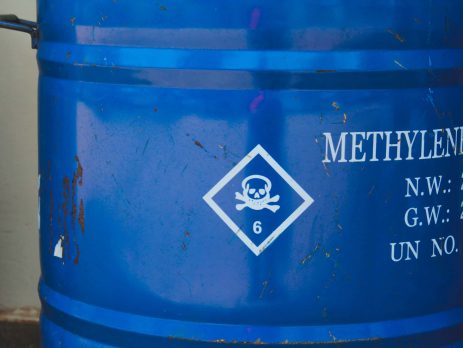
Methylene blue has several medical applications, such as treating the blood disorder methemoglobinemia and counteracting the poisonous effects of potassium cyanide. In chemistry, it's one of the various types of chemical indicators used in titration experiments and similar analytical methods. It’s used as a redox indicator, peroxide generator, water titrant, and sulphide indicator.What is the Chemical Name for Methylene Blue?Methylene...

About The Chemistry Blog

At The Chemistry Blog, we want to inform and educate people about chemistry, the chemical industry, and the uses, benefits, and applications of different chemicals, from isopropyl alcohol and buffers to standard solutions. No matter what it is you’re looking for, you’ll find plenty of chemical information here.

The Chemistry Blog is also home to a massive range of educational resources. Whether you’re studying for your upcoming GCSE or A level exam, or want to know more about how to pursue a degree in chemistry, there’s a wealth of information at your fingertips. Beyond this, our series of articles on apprenticeships in the chemical industry help equip aspiring scientists with the knowledge they need to take that next step in their career.

The Chemistry Blog also provides information on specific fields in the chemical industry, from biotechnology to biochemistry to analytical chemistry, and explores the science behind key topics and chemical phenomena, like titration and distillation. Plus, if you’re looking to grapple with more complex subjects, feed your appetite with articles like the decomposition of hydrogen peroxide or the reaction between hydrochloric acid and sodium thiosulphate.

But you don’t have to be a science pro or student to enjoy what we have on The Chemistry Blog. Have you ever wondered about the chemicals in swimming pools or oven cleaners? Do you want to get the most out of that jar of baking soda in your cupboard, or learn how to remove sticky labels using some rubbing alcohol? The Chemistry Blog is home to tons of articles that explore the applications and science behind common household chemicals so that you can better understand the things you use everyday. So, whether you’re a student, a science buff, or simply curious, there’s something for everyone on The Chemistry Blog!


How can ReAgent help you?

Send us a message and our friendly team will get back to you within one business day.

What happens to my enquiry?

Your message is sent directly to our dedicated customer service support team where it is distributed to the department best suited to help you. During office hours one of our staff members will promptly email you back or give you a quick call to discuss your requirements or respond to your question. All without obligation or sales pressure. We are here to help you, and are dedicated to “above and beyond” levels of customer service.

Prefer to call?

Call us FREE on 0800 9555 798. Overseas? Call +44 1928 716903. Available 8:30am – 5pm, Monday to Friday.

Customer Service
“All enquiries are treated as confidential – we never share your details”
Kerry
Customer Service
Sales Director
“Our manufacturing facility is accredited to ISO 9001, ISO 13485, ISO 14001 and ISO 45001”
Darren
Technical Director
Account Director

“We provide comprehensive technical support with every enquiry”
Jo
Account Director

Jane Fletcher
Google
5/5
Always have excellent service from yourselves from ordering product to delivery.
Kevin Wallcroft
Google
5/5
A particularly easy to deal with chemical company. I telephoned, got all the advice needed with excellent friendly service. My chemicals arrived the very next day. Very happy!
Joanne King
Google
5/5
Fast efficient service, was kept updated on order throughout. Can not fault ReAgent sales and delivery processes.
Hebe Arat
Google
5/5
Their customer services were very helpful, sending us all the lab reports we needed, before we even bought from them. Then, once we ordered the product came very quickly.

Search the chemicals you need by product name, product number, or CAS number:

What Are Laboratory Chemicals?