The Chemistry Blog

Chemical uses, chemistry information and industry news

What is the Definition of Evaporation in Chemistry?

Evaporation is a natural or synthesised process by which liquid substances transition into a gaseous state with the action of heat. The water cycle, which involves the evaporation and precipitation of water, is one of the major driving forces of the weather and global climate, and one of the best examples of evaporation.Evaporation is generally a cooling process that has several...

A Level Chemistry Revision: Inorganic Chemistry – Group 7(17), The Halogens

The halogens are the six nonmetallic, highly reactive elements under Group VIIa (column 17) of the periodic table. They’re very strong oxidising agents, which means they take electrons from other substances. They’re also very reactive and usually form salts with Group 1a, i.e. the alkali metals. The name halogen literally means salt-producing. Halogens in elemental form do not exist in...

A Level Chemistry Revision: Inorganic Chemistry – Group 2, The Alkaline Earth Metals

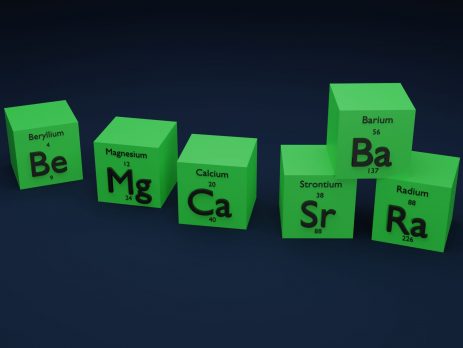
Alkaline earth metals, which are under Group 2 (the second column) of the periodic table, are highly reactive metals, though they’re not as reactive as the alkali metals. Their high reactivity is the main reason they aren’t found in a pure or elemental form in nature. Structurally speaking, these metals have two valence electrons in their outermost energy level. Many of...

How To Carry Out a Titration Experiment

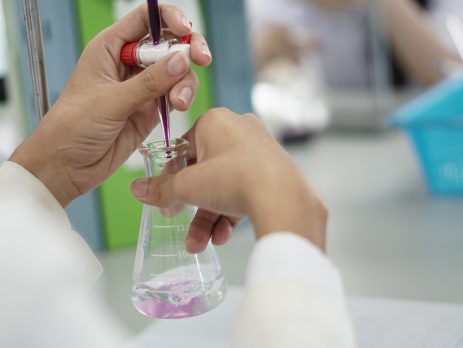
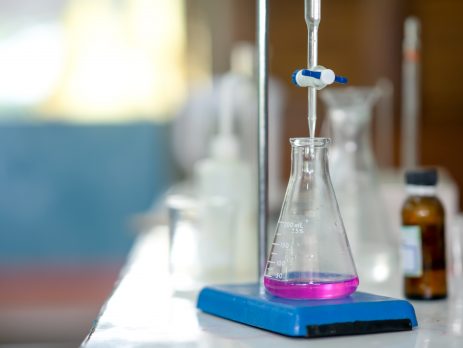
A titration experiment is the gradual adding of a known concentration of a reagent, called a titrant, to an unknown concentration of an analyte (the substance being analysed) until an endpoint is reached. Titration is one of the classic experiments in chemistry, and it’s done by most students at school. Usually, chemical indicators that change colour are used to determine the...

A Level Chemistry Revision: Inorganic Chemistry – Periodicity

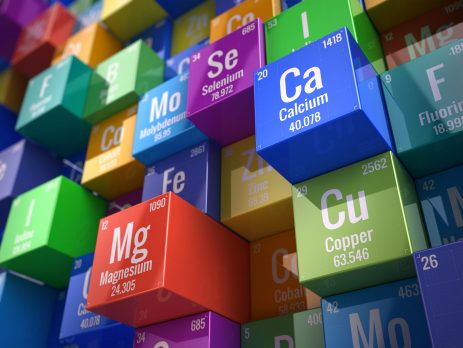
Many elements were discovered long before the periodicity of elements was established by Dmitri Mendeleev in 1869. Mendeleev arranged the then-known elements in tabular form and discerned a pattern. With this, he was able to predict the existence of elements that had not yet been discovered.Since ancient times, philosophers have speculated about the fundamental compositions of all substances that can...

What is Titration in Chemistry?

Titration is an analytical laboratory method of determining the molar concentration of an analyte (the solution being identified). During titration, a known concentration of a reactant is prepared and gradually added to the analyte, while carefully measuring the volume, until a reaction threshold is reached.What is Titration Used For?Titration is very useful in the quantitative analysis of the molar concentration...

A Level Chemistry Revision: Physical Chemistry – Acids And Bases

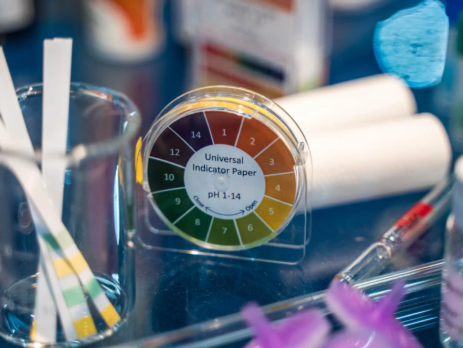
Acids and bases are fundamental in the study of chemistry. The reactions between the two are fast and exothermic, meaning they release heat, which makes them measurable and observable. Even without precise instruments, you can easily estimate whether a reaction has reached its saturation point.Acids and bases are polar opposites of each other, but also complementary. Therefore, their reactions are...

A Level Chemistry Revision: Physical Chemistry – Electrode Potentials And Electrochemical Cells

One of the most important applications of chemistry is storing electrical energy for prolonged periods of time. Modern technological products like laptops, mobile phones, solar power, and hybrid cars would not have been possible without the invention of batteries, which are basically electrochemical storage devices that have two electrodes and an electrolyte.In order for batteries to work, regardless of the...

What is Sodium Hypochlorite?

Sodium hypochlorite is a liquid chlorine, and is the active ingredient in many laundry bleach products and household cleaning products. It also has several large-scale applications. For example, it’s used in agriculture to protect crops from pathogens, and it’s also used in the synthesis of various pharmaceutical products. Perhaps the biggest use of this chemical is in bleaching textiles.As well...

About The Chemistry Blog

At The Chemistry Blog, we want to inform and educate people about chemistry, the chemical industry, and the uses, benefits, and applications of different chemicals, from isopropyl alcohol and buffers to standard solutions. No matter what it is you’re looking for, you’ll find plenty of chemical information here.

The Chemistry Blog is also home to a massive range of educational resources. Whether you’re studying for your upcoming GCSE or A level exam, or want to know more about how to pursue a degree in chemistry, there’s a wealth of information at your fingertips. Beyond this, our series of articles on apprenticeships in the chemical industry help equip aspiring scientists with the knowledge they need to take that next step in their career.

The Chemistry Blog also provides information on specific fields in the chemical industry, from biotechnology to biochemistry to analytical chemistry, and explores the science behind key topics and chemical phenomena, like titration and distillation. Plus, if you’re looking to grapple with more complex subjects, feed your appetite with articles like the decomposition of hydrogen peroxide or the reaction between hydrochloric acid and sodium thiosulphate.

But you don’t have to be a science pro or student to enjoy what we have on The Chemistry Blog. Have you ever wondered about the chemicals in swimming pools or oven cleaners? Do you want to get the most out of that jar of baking soda in your cupboard, or learn how to remove sticky labels using some rubbing alcohol? The Chemistry Blog is home to tons of articles that explore the applications and science behind common household chemicals so that you can better understand the things you use everyday. So, whether you’re a student, a science buff, or simply curious, there’s something for everyone on The Chemistry Blog!


How can ReAgent help you?

Send us a message and our friendly team will get back to you within one business day.

What happens to my enquiry?

Your message is sent directly to our dedicated customer service support team where it is distributed to the department best suited to help you. During office hours one of our staff members will promptly email you back or give you a quick call to discuss your requirements or respond to your question. All without obligation or sales pressure. We are here to help you, and are dedicated to “above and beyond” levels of customer service.

Prefer to call?

Call us FREE on 0800 9555 798. Overseas? Call +44 1928 716903. Available 8:30am – 5pm, Monday to Friday.

Customer Service
“All enquiries are treated as confidential – we never share your details”
Kerry
Customer Service
Sales Director
“Our manufacturing facility is accredited to ISO 9001, ISO 13485, ISO 14001 and ISO 45001”
Darren
Technical Director
Account Director

“We provide comprehensive technical support with every enquiry”
Jo
Account Director

Jane Fletcher
Google
5/5
Always have excellent service from yourselves from ordering product to delivery.
Kevin Wallcroft
Google
5/5
A particularly easy to deal with chemical company. I telephoned, got all the advice needed with excellent friendly service. My chemicals arrived the very next day. Very happy!
Joanne King
Google
5/5
Fast efficient service, was kept updated on order throughout. Can not fault ReAgent sales and delivery processes.
Hebe Arat
Google
5/5
Their customer services were very helpful, sending us all the lab reports we needed, before we even bought from them. Then, once we ordered the product came very quickly.

Search the chemicals you need by product name, product number, or CAS number:

What is the Definition of Evaporation in Chemistry?