The Chemistry Blog

Chemical uses, chemistry information and industry news

A Level Chemistry Revision: Organic Chemistry – Alcohols

Part of the syllabus for A level organic chemistry is the study of alcohols. When you come to revise this group of organic substances, it’s crucial to learn about their general structures, functional groups, chemical properties, physical properties, and reactions. Continue reading for an overview of each of these topics so that you can enter the classroom more prepared.  What You...

Examples of Combustion Reactions in Chemistry

There are several types of combustion reactions in chemistry, with the two most common being complete and incomplete combustion. The type or reaction varies depending on several factors, such as the:Type of combustible material Surface area of the material Vapour pressure Amount of oxygen Atmospheric pressureAny chemical reaction that involves oxygen as one of the reactants and produces heat...

A Level Chemistry Revision: Organic Chemistry – Halogenoalkanes

Also known as haloalkanes and alkyl halides, halogenoalkanes are organic compounds derived from alkanes, but with one hydrogen substituted for a halogen. They’re part of a much larger category known as halocarbons. Hydrocarbons with more than one hydrogen substituted by a halogen are called halogenated hydrocarbons.Halogenoalkanes have several commercial and industrial applications. For example, these compounds are commonly used in...

A Level Chemistry Revision: Organic Chemistry – Alkanes

Alkanes are saturated hydrocarbons. This means that each carbon atom is single-bonded to another carbon atom. Alkanes exist in straight chain, branched (isomeric), and cyclic forms. You can use a general formula to determine the specific formulas based on the number of carbon atoms. You can also easily name alkanes using the IUPAC standards.The study of specific substances in organic...

A Level Chemistry Revision: Organic Chemistry – Introduction To Organic Chemistry

Organic chemistry is somewhere between inorganic chemistry and biochemistry. While it focuses on carbon-based substances, it isn’t concerned with the biological processes that produce many of the organic compounds that it studies.When revising for organic chemistry as part of your chemistry A level, you’ll also need a proper foundation in inorganic chemistry. For example, you’ll need to know about both...

A Level Chemistry Revision: Inorganic Chemistry – Reactions Of Ions In Aqueous Solution

Many inorganic metallic compounds take the form of ions when dissolved in water (i.e. an aqueous solution). The laws that govern their reactions are similar to how compounds react, but with one important emphasis on the role of water in the reactions. In fact, their balanced equations involve water in a generalised stoichiometry form that can be written as:M represents...

A Level Chemistry Revision: Inorganic Chemistry – Transition Metals

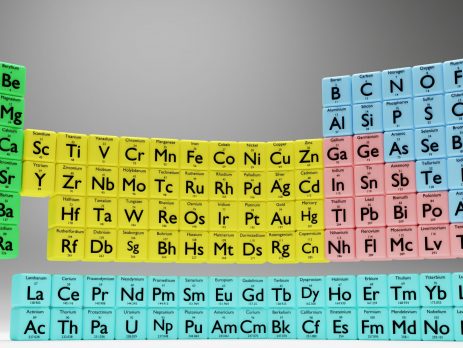
The transition metals, or transition elements, are those belonging to groups 3 to 12 in the periodic table, with the exception of the lanthanides and actinides, which have their own periodicity properties. Unlike other elements, the transition metals have more complex behaviours in terms of their electron configurations, and are relatively more difficult to figure out.Many electron configurations are straightforward and...

What is Viscosity in Chemistry?

Viscosity is the tendency of fluids, in either liquid or gas form, to resist forces that act against them. For example, if you tried to rapidly stir pure water while rapidly stirring molasses, you would find it much more difficult to stir the latter. With this in mind, viscosity can also refer to how thick a fluid is.Viscosity can either...

A Level Chemistry Revision: Inorganic Chemistry – Properties Of Period 3 Elements & Their Oxides

Period 3 elements are those in the third row of the periodic table. The way period 3 elements form oxides, and how they react with other chemicals, is related to their positions in the periodic table. Furthermore, you can compare the relative atomic radius, ionisation energy, and electron affinity of the eight period 3 elements. The period 3 elements are:Sodium Magnesium Aluminium Silicon Phosphorous Sulphur Chlorine ArgonWhat...

About The Chemistry Blog

At The Chemistry Blog, we want to inform and educate people about chemistry, the chemical industry, and the uses, benefits, and applications of different chemicals, from isopropyl alcohol and buffers to standard solutions. No matter what it is you’re looking for, you’ll find plenty of chemical information here.

The Chemistry Blog is also home to a massive range of educational resources. Whether you’re studying for your upcoming GCSE or A level exam, or want to know more about how to pursue a degree in chemistry, there’s a wealth of information at your fingertips. Beyond this, our series of articles on apprenticeships in the chemical industry help equip aspiring scientists with the knowledge they need to take that next step in their career.

The Chemistry Blog also provides information on specific fields in the chemical industry, from biotechnology to biochemistry to analytical chemistry, and explores the science behind key topics and chemical phenomena, like titration and distillation. Plus, if you’re looking to grapple with more complex subjects, feed your appetite with articles like the decomposition of hydrogen peroxide or the reaction between hydrochloric acid and sodium thiosulphate.

But you don’t have to be a science pro or student to enjoy what we have on The Chemistry Blog. Have you ever wondered about the chemicals in swimming pools or oven cleaners? Do you want to get the most out of that jar of baking soda in your cupboard, or learn how to remove sticky labels using some rubbing alcohol? The Chemistry Blog is home to tons of articles that explore the applications and science behind common household chemicals so that you can better understand the things you use everyday. So, whether you’re a student, a science buff, or simply curious, there’s something for everyone on The Chemistry Blog!


How can ReAgent help you?

Send us a message and our friendly team will get back to you within one business day.

What happens to my enquiry?

Your message is sent directly to our dedicated customer service support team where it is distributed to the department best suited to help you. During office hours one of our staff members will promptly email you back or give you a quick call to discuss your requirements or respond to your question. All without obligation or sales pressure. We are here to help you, and are dedicated to “above and beyond” levels of customer service.

Prefer to call?

Call us FREE on 0800 9555 798. Overseas? Call +44 1928 716903. Available 8:30am – 5pm, Monday to Friday.

Customer Service
“All enquiries are treated as confidential – we never share your details”
Kerry
Customer Service
Sales Director
“Our manufacturing facility is accredited to ISO 9001, ISO 13485, ISO 14001 and ISO 45001”
Darren
Technical Director
Account Director

“We provide comprehensive technical support with every enquiry”
Jo
Account Director

Jane Fletcher
Google
5/5
Always have excellent service from yourselves from ordering product to delivery.
Kevin Wallcroft
Google
5/5
A particularly easy to deal with chemical company. I telephoned, got all the advice needed with excellent friendly service. My chemicals arrived the very next day. Very happy!
Joanne King
Google
5/5
Fast efficient service, was kept updated on order throughout. Can not fault ReAgent sales and delivery processes.
Hebe Arat
Google
5/5
Their customer services were very helpful, sending us all the lab reports we needed, before we even bought from them. Then, once we ordered the product came very quickly.

Search the chemicals you need by product name, product number, or CAS number:

A Level Chemistry Revision: Organic Chemistry – Alcohols