The Chemistry Blog

Chemical uses, chemistry information and industry news

How To Measure The Rate Of Reaction

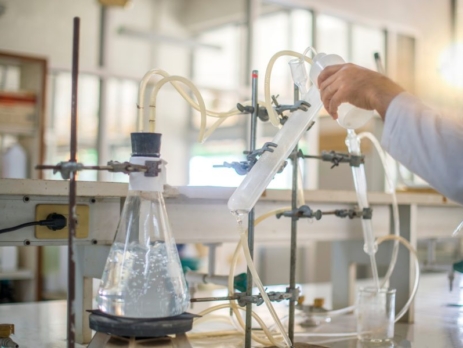
You can measure the rate of a chemical reaction by examining the ratio between the amount of substance or products formed and the time it took to produce them. Products can either be measured by mass per unit time or by volume per unit time.Measuring reaction rates is crucial in both analytic and synthetic aspects of chemistry. For instance, plastics...

Are Bleach & Hydrogen Peroxide The Same?

The short answer to this question is that while hydrogen peroxide is a type of bleach, not all bleach products have hydrogen peroxide as the active ingredient.For example, the bleach you use for laundry can be classified into two categories: a chlorine-based bleach and an oxygen-based (peroxide-based) bleach. Both remove stains and kill microorganisms through oxidation-reduction reactions.However, oxygen-based bleach products...

How To Handle Corrosive Chemicals

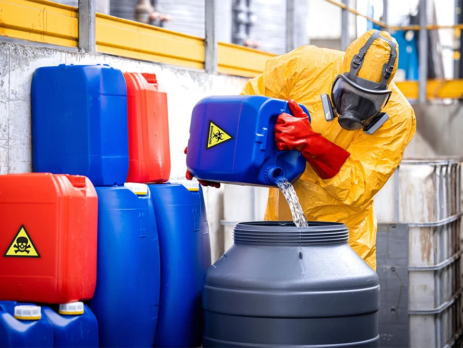
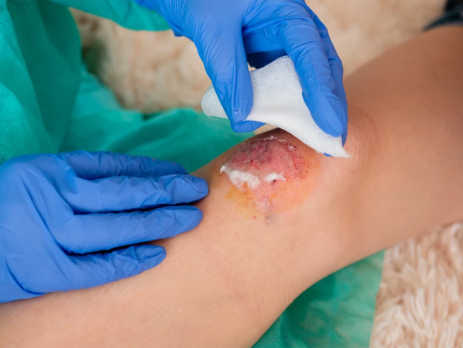
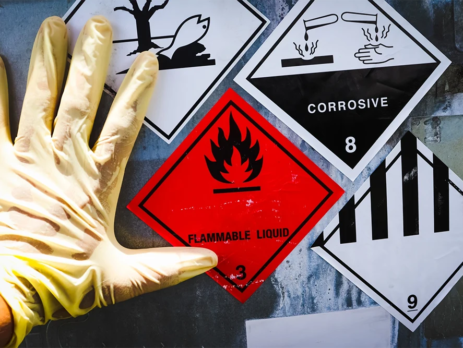
Many chemicals found in chemistry laboratories or the workplace can be dangerous. These include poisonous, flammable, explosive, and corrosive chemicals, as we’ll explain in this article.Acids and bases are particularly corrosive. They can cause skin burns and damage to the mucous membrane. Continue reading to understand how to safely handle corrosive chemicals, such as by wearing appropriate PPE and being...

What Is A Salt In Chemistry?

In chemistry, a salt is an ionic compound that’s typically in crystalline solid form when dry. As salts are often the product of a neutralisation reaction between an acid and a base, they generally have a neutral pH.The most common type of salt on Earth exists as a dissolved substance in our oceans. Salts, particularly table salt or sodium chloride,...

How To Handle Flammable Chemicals

Many chemicals in laboratories, workplaces, factories, and even your home are flammable. That means they can easily be ignited because of their volatility and composition, and they require careful handling.Some common flammable chemicals include alcohols, acetone, turpentine, kerosene, LPG, butane, propane, sulphur, and phosphorus. These are dangerous chemicals that can cause fires, damaging properties and causing injuries.Flammable chemicals must be...

The Decomposition of Hydrogen Peroxide

Hydrogen peroxide (H2O2) is everywhere. It’s in your bleach, your hair dye, your cleaning cabinet and even your teeth whiteners. What you may not know is that this chemical is decomposing all the time. This happens very slowly but, with the magic of science, we can speed it up. The Science Behind Hydrogen Peroxide Decomposition When it comes to determining exactly why...

What Is Medical Grade Water?

As the name implies, medical grade water is purified water used in the medical field. It is primarily used to sterilise medical tools and other objects to kill bacteria, viruses, fungi, spores, and other microscopic organisms that they may have come in contact with.Continue reading to find out more about what medical grade water is, how it’s purified, and its...

What Is A Mixture In Chemistry?

A mixture is a combination of two or more substances that do not chemically react. As we explain later on, mixtures can either be heterogeneous or homogeneous.Mixtures are defined based on how the constituents are combined. They could be a combination of various states of matter, for example, air dissolved in water, or a combination of solids such as the...

Does Hydrogen Peroxide Dissolve Ear Wax?

Many over-the-counter ear drops contain hydrogen peroxide because it effectively dissolves ear wax. Why does this happen? Put simply, when the oxygen in the hydrogen peroxide makes contact with the ear wax, it creates bubbles that cause the wax to soften and break down.Continue reading to learn more about this common chemical and its role in ear wax removal. You’ll...

About The Chemistry Blog

At The Chemistry Blog, we want to inform and educate people about chemistry, the chemical industry, and the uses, benefits, and applications of different chemicals, from isopropyl alcohol and buffers to standard solutions. No matter what it is you’re looking for, you’ll find plenty of chemical information here.

The Chemistry Blog is also home to a massive range of educational resources. Whether you’re studying for your upcoming GCSE or A level exam, or want to know more about how to pursue a degree in chemistry, there’s a wealth of information at your fingertips. Beyond this, our series of articles on apprenticeships in the chemical industry help equip aspiring scientists with the knowledge they need to take that next step in their career.

The Chemistry Blog also provides information on specific fields in the chemical industry, from biotechnology to biochemistry to analytical chemistry, and explores the science behind key topics and chemical phenomena, like titration and distillation. Plus, if you’re looking to grapple with more complex subjects, feed your appetite with articles like the decomposition of hydrogen peroxide or the reaction between hydrochloric acid and sodium thiosulphate.

But you don’t have to be a science pro or student to enjoy what we have on The Chemistry Blog. Have you ever wondered about the chemicals in swimming pools or oven cleaners? Do you want to get the most out of that jar of baking soda in your cupboard, or learn how to remove sticky labels using some rubbing alcohol? The Chemistry Blog is home to tons of articles that explore the applications and science behind common household chemicals so that you can better understand the things you use everyday. So, whether you’re a student, a science buff, or simply curious, there’s something for everyone on The Chemistry Blog!


How can ReAgent help you?

Send us a message and our friendly team will get back to you within one business day.

What happens to my enquiry?

Your message is sent directly to our dedicated customer service support team where it is distributed to the department best suited to help you. During office hours one of our staff members will promptly email you back or give you a quick call to discuss your requirements or respond to your question. All without obligation or sales pressure. We are here to help you, and are dedicated to “above and beyond” levels of customer service.

Prefer to call?

Call us FREE on 0800 9555 798. Overseas? Call +44 1928 716903. Available 8:30am – 5pm, Monday to Friday.

Customer Service
“All enquiries are treated as confidential – we never share your details”
Kerry
Customer Service
Sales Director
“Our manufacturing facility is accredited to ISO 9001, ISO 13485, ISO 14001 and ISO 45001”
Darren
Technical Director
Account Director

“We provide comprehensive technical support with every enquiry”
Jo
Account Director

Jane Fletcher
Google
5/5
Always have excellent service from yourselves from ordering product to delivery.
Kevin Wallcroft
Google
5/5
A particularly easy to deal with chemical company. I telephoned, got all the advice needed with excellent friendly service. My chemicals arrived the very next day. Very happy!
Joanne King
Google
5/5
Fast efficient service, was kept updated on order throughout. Can not fault ReAgent sales and delivery processes.
Hebe Arat
Google
5/5
Their customer services were very helpful, sending us all the lab reports we needed, before we even bought from them. Then, once we ordered the product came very quickly.

Search the chemicals you need by product name, product number, or CAS number:

How To Measure The Rate Of Reaction