The Chemistry Blog

Chemical uses, chemistry information and industry news

A Breakdown Of Titration Experiments In Chemistry

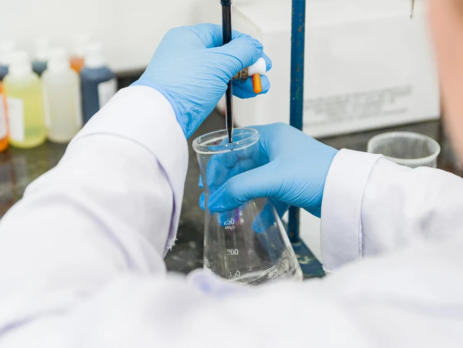
Titration experiments are amongst the most common laboratory experiments performed in chemistry. They’re designed to indirectly measure the concentration of a substance (analyte) by gradually adding another substance (titrant).You’ve probably performed a titration experiment at school and in your academic studies. While the substances and concentrations may vary, the fundamental techniques are essentially the same.An indicator, such as litmus paper,...

What Is An Element In Chemistry?

An element in chemistry refers to the simplest chemical form in which a substance can exist. Put simply, it means it can’t be further broken down or decomposed into simpler chemical substances.Knowing how many protons (the atomic number) are in each element makes it possible for scientists to organise elements in a periodic table. The arrangement of the periodic table...

13 Must-Read Chemistry Books

There are plenty of chemistry books on the market, but the best ones can be hard to find. Unfortunately, many school board-approved textbooks often lack inspiration and, to put it bluntly, are about as bland as it gets! To help separate the good from the, well, not-so-good, we’ve compiled a list of the top 13 must-read chemistry books. Whether you’re studying...

The Chemistry Of Happiness

The chemistry of happiness is directly related to chemical neurotransmitters in the brain, which are responsible for regulating our mood and cognitive functions. As we explore in this article, the four key ‘happy chemicals’ are dopamine, oxytocin, serotonin, and endorphins. What is happiness scientifically? There are many factors that can influence happiness, but the chemical reactions and electrical activities in our brain...

What Is Neutralisation In Chemistry?

Neutralisation in chemistry is when an acid and a base react to form salt and water, which typically have a neutral pH. Neutralisation reactions can be classified into several types depending on the respective strengths of the reactants. They may also be grouped according to the Arrhenius and Bronsted-Lowry definitions of acids and bases.As we explain in this article, acid-base reactions...

The Chemistry of Colour

The chemistry of colour covers the way in which different frequencies and wavelengths of visible light are absorbed or reflected by molecules known as pigments. These pigments have specific compositions and configurations that correspond to their respective colours. From the varying colours of autumn leaves to the dyes used in the clothing industry, our world is full of rich and diverse...

How to Balance an Equation in Chemistry

To balance a chemical equation in chemistry, you must follow the law of conservation of mass, which stipulates that the total molar mass of the reactants must be equal to the total molar mass of the products. This is done by writing numerical coefficients to indicate how many moles of each substance are present during a chemical reaction.It’s important to...

Addictive Behaviour: The Chemistry of Addiction

The chemistry of addiction is centred in the brain and the way it produces certain chemical interactions. In particular, dopamine is responsible for the feeling of pleasure.Our brain is like a chemical manufacturer that produces various types of neurotransmitters and hormones. Some of the most important ones have a direct effect on the brain itself, acting as mood modulators, painkillers,...

What Happens When You Mix Bleach and Ammonia?

Mixing bleach and ammonia creates a highly toxic gas called chloramine that can potentially kill anyone who inhales it. You should therefore never mix these two cleaning agents.Many household cleaning products contain bleach or ammonia, meaning they’re already dangerous in themselves. However, these chemicals can become even more lethal if they mix. That’s because the reaction between bleach and ammonia...

About The Chemistry Blog

At The Chemistry Blog, we want to inform and educate people about chemistry, the chemical industry, and the uses, benefits, and applications of different chemicals, from isopropyl alcohol and buffers to standard solutions. No matter what it is you’re looking for, you’ll find plenty of chemical information here.

The Chemistry Blog is also home to a massive range of educational resources. Whether you’re studying for your upcoming GCSE or A level exam, or want to know more about how to pursue a degree in chemistry, there’s a wealth of information at your fingertips. Beyond this, our series of articles on apprenticeships in the chemical industry help equip aspiring scientists with the knowledge they need to take that next step in their career.

The Chemistry Blog also provides information on specific fields in the chemical industry, from biotechnology to biochemistry to analytical chemistry, and explores the science behind key topics and chemical phenomena, like titration and distillation. Plus, if you’re looking to grapple with more complex subjects, feed your appetite with articles like the decomposition of hydrogen peroxide or the reaction between hydrochloric acid and sodium thiosulphate.

But you don’t have to be a science pro or student to enjoy what we have on The Chemistry Blog. Have you ever wondered about the chemicals in swimming pools or oven cleaners? Do you want to get the most out of that jar of baking soda in your cupboard, or learn how to remove sticky labels using some rubbing alcohol? The Chemistry Blog is home to tons of articles that explore the applications and science behind common household chemicals so that you can better understand the things you use everyday. So, whether you’re a student, a science buff, or simply curious, there’s something for everyone on The Chemistry Blog!


How can ReAgent help you?

Send us a message and our friendly team will get back to you within one business day.

What happens to my enquiry?

Your message is sent directly to our dedicated customer service support team where it is distributed to the department best suited to help you. During office hours one of our staff members will promptly email you back or give you a quick call to discuss your requirements or respond to your question. All without obligation or sales pressure. We are here to help you, and are dedicated to “above and beyond” levels of customer service.

Prefer to call?

Call us FREE on 0800 9555 798. Overseas? Call +44 1928 716903. Available 8:30am – 5pm, Monday to Friday.

Customer Service
“All enquiries are treated as confidential – we never share your details”
Kerry
Customer Service
Sales Director
“Our manufacturing facility is accredited to ISO 9001, ISO 13485, ISO 14001 and ISO 45001”
Darren
Technical Director
Account Director

“We provide comprehensive technical support with every enquiry”
Jo
Account Director

Jane Fletcher
Google
5/5
Always have excellent service from yourselves from ordering product to delivery.
Kevin Wallcroft
Google
5/5
A particularly easy to deal with chemical company. I telephoned, got all the advice needed with excellent friendly service. My chemicals arrived the very next day. Very happy!
Joanne King
Google
5/5
Fast efficient service, was kept updated on order throughout. Can not fault ReAgent sales and delivery processes.
Hebe Arat
Google
5/5
Their customer services were very helpful, sending us all the lab reports we needed, before we even bought from them. Then, once we ordered the product came very quickly.

Search the chemicals you need by product name, product number, or CAS number:

A Breakdown Of Titration Experiments In Chemistry