The Chemistry Blog

Chemical uses, chemistry information and industry news

What is Aqua Regia?

Aqua regia is a highly corrosive mixture of concentrated nitric acid and hydrochloric acid. With the ability to dissolve noble metals, it was once used by alchemists on their quest to find the philosopher’s stone. Properties of Aqua Regia Aqua regia appears as a yellow-orange fuming liquid. The presence of nitric and hydrochloric acid makes this substance extremely corrosive, especially to metals...

How to Unblock a Sink Using Sodium Hydroxide

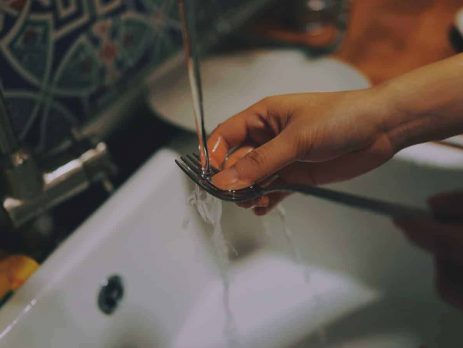
Sodium hydroxide (NaOH) is a strongly alkaline compound that appears as a white solid. It is commonly used in the manufacture of soap and detergents, but did you know that it can also help unblock your sink? Here's how... Use Sodium Hydroxide to Unblock Your Sink As a strong base that is very reactive, there are several ways that sodium hydroxide can...

What Does Sodium Hydroxide React With?

Sodium hydroxide (NaOH) is a strongly basic organic compound that is also very hygroscopic. Also known as caustic soda or lye, it reacts with a number of compounds to produce very different results. Dissolving in Water Sodium hydroxide ionises when it is dissolved in water. While this may not necessarily be a chemical reaction, it is an important characteristic of how this...

What is Sodium Hydroxide?

Also known as caustic soda or lye, sodium hydroxide is a diverse chemical compound that is used in the manufacture of everyday products like soaps, detergents and paper. It was even used by a famous serial killer to help destroy the evidence... Properties of Sodium Hydroxide Sodium hydroxide is an inorganic, white solid that is strongly alkaline. As an ionic compound, it...

What is the Difference Between Propan-1-ol and Propan-2-ol?

Propan-1-ol and propan-2-ol are both alcohols that share the same general chemical formula (C3H8O), so what is the difference between them exactly? It all comes down to their atomic arrangement and how the hydroxyl group is positioned.In a nutshell, the difference between propan-1-ol and propan-2-ol is the position of their respective hydroxyl (-OH) groups. Propan-1-ol has an –OH group attached...

How Does Sodium Thiosulphate Cure Cyanide Poisoning?

Sodium thiosulphate (Na2S2O3) is considered one of the most important medicines in the health system because of its ability to treat rare diseases, like pityriasis versicolour, calciphylaxis and, most famously, cyanide poisoning.Cyanide poisoning is very rare yet very sinister. It works by depriving cells of oxygen which leads to the death of critical cells. The properties of sodium thiosulphate make...

What is Sodium Thiosulphate?

Sodium thiosulphate (Na2S2O3) is an inorganic salt compound that is chiefly used as an antidote for cyanide poisoning. Recognised as one of the most important medicines in the health system, it has several medical uses and a range of interesting properties. Properties Also known as sodium hyposulfite or simply as hypo, this compound appears in two forms: anhydrous and pentahydrate. However,...

5 Uses of Hydrochloric Acid

Hydrochloric acid (HCl) may be the simplest chlorine-based acid, but it is still strongly corrosive. We've written about the history behind and properties of hydrochloric acid, so this week we thought we’d take a look into its five most popular uses.But limiting the uses of hydrochloric acid to five is not an easy task. Known as a ‘workhorse’ chemical, this compound...

What Is Hydrochloric Acid?

Hydrochloric acid (HCl) is a corrosive and strongly acidic solution that is made by dissolving gaseous hydrogen chloride in water. It is made industrially as well as in the body. Properties of HCl Hydrochloric acid is the simplest chlorine-based acid that contains water. In spite of its acidity, it is also the least hazardous strong acid to handle because of its non-toxic...

About The Chemistry Blog

At The Chemistry Blog, we want to inform and educate people about chemistry, the chemical industry, and the uses, benefits, and applications of different chemicals, from isopropyl alcohol and buffers to standard solutions. No matter what it is you’re looking for, you’ll find plenty of chemical information here.

The Chemistry Blog is also home to a massive range of educational resources. Whether you’re studying for your upcoming GCSE or A level exam, or want to know more about how to pursue a degree in chemistry, there’s a wealth of information at your fingertips. Beyond this, our series of articles on apprenticeships in the chemical industry help equip aspiring scientists with the knowledge they need to take that next step in their career.

The Chemistry Blog also provides information on specific fields in the chemical industry, from biotechnology to biochemistry to analytical chemistry, and explores the science behind key topics and chemical phenomena, like titration and distillation. Plus, if you’re looking to grapple with more complex subjects, feed your appetite with articles like the decomposition of hydrogen peroxide or the reaction between hydrochloric acid and sodium thiosulphate.

But you don’t have to be a science pro or student to enjoy what we have on The Chemistry Blog. Have you ever wondered about the chemicals in swimming pools or oven cleaners? Do you want to get the most out of that jar of baking soda in your cupboard, or learn how to remove sticky labels using some rubbing alcohol? The Chemistry Blog is home to tons of articles that explore the applications and science behind common household chemicals so that you can better understand the things you use everyday. So, whether you’re a student, a science buff, or simply curious, there’s something for everyone on The Chemistry Blog!


How can ReAgent help you?

Send us a message and our friendly team will get back to you within one business day.

What happens to my enquiry?

Your message is sent directly to our dedicated customer service support team where it is distributed to the department best suited to help you. During office hours one of our staff members will promptly email you back or give you a quick call to discuss your requirements or respond to your question. All without obligation or sales pressure. We are here to help you, and are dedicated to “above and beyond” levels of customer service.

Prefer to call?

Call us FREE on 0800 9555 798. Overseas? Call +44 1928 716903. Available 8:30am – 5pm, Monday to Friday.

Customer Service
“All enquiries are treated as confidential – we never share your details”
Kerry
Customer Service
Sales Director
“Our manufacturing facility is accredited to ISO 9001, ISO 13485, ISO 14001 and ISO 45001”
Darren
Technical Director
Account Director

“We provide comprehensive technical support with every enquiry”
Jo
Account Director

Jane Fletcher
Google
5/5
Always have excellent service from yourselves from ordering product to delivery.
Kevin Wallcroft
Google
5/5
A particularly easy to deal with chemical company. I telephoned, got all the advice needed with excellent friendly service. My chemicals arrived the very next day. Very happy!
Joanne King
Google
5/5
Fast efficient service, was kept updated on order throughout. Can not fault ReAgent sales and delivery processes.
Hebe Arat
Google
5/5
Their customer services were very helpful, sending us all the lab reports we needed, before we even bought from them. Then, once we ordered the product came very quickly.

Search the chemicals you need by product name, product number, or CAS number:

What is Aqua Regia?